Roundup
Best ping pong paddles for beginners
The paddle a beginner should buy is the opposite of the paddle the reviews rate highest. Grippier rubber and more speed make a new player miss more, not less.
By Ryder M. · Last updated October 17, 2026 · How we pick
Cue & Paddle is reader-funded. If you buy through a link on this page we may earn a commission, at no extra cost to you. It never changes which products we pick or how we rank them — read the full disclosure.
The top pick: the STIGA Phoenix, because it is a control-first bat that forgives an imperfect stroke while still teaching what spin feels like — which is precisely what a beginner needs and what a tournament bat refuses to do. If four people share a table, buy a four-player set instead and spend the difference on balls. If a beginner is being coached, go slower still.
Paddle advice for beginners is badly distorted by review sites, because the paddles that score highest are tournament bats — fast blades with tacky, high-throw rubber designed for players who already have repeatable strokes. In a beginner's hand, those qualities make the ball less predictable, not more. The fastest route to playing well is a slower bat.
The core point
Why slower is better at the start
A table tennis rubber does two things: it converts the speed of your stroke into ball speed, and it converts the angle of your stroke into spin. Tournament rubber does both aggressively. That is excellent when your stroke is what you intended and disastrous when it is not, because the bat faithfully amplifies the mistake.
A beginner's strokes vary shot to shot. On a control bat, that variation produces small errors you can see and correct. On a fast tacky bat, the same variation produces wildly different results — one ball into the net, the next over the end of the table — and there is no pattern to learn from. The slower bat is not a lesser bat for a learner. It is the diagnostic tool.
| Attribute | Beginner should want | Why reviews recommend the opposite |
|---|---|---|
| Rubber speed | Low to medium | Fast rubber wins points for players who already control it |
| Rubber tack | Moderate grip | Tacky rubber generates more spin — and more unintended spin |
| Sponge thickness | 1.5-1.8 mm | 2.0 mm+ adds speed and reduces control |
| Blade plies | 5-ply all-wood | Carbon layers add speed and stiffness, both unhelpful early |
| Weight | Lighter, handle-balanced | Head-heavy bats hit harder and are harder to square |
| Price | Entry to mid | Review scores cluster at tournament prices |
Sponge thickness is printed on most rubbers and is the single easiest spec to check. If a bat lists 2.1 mm or thicker, it is not a beginner bat.
Quick picks
Tap any row to jump to the full write-up.
| # | Product | Best for | Price |
|---|---|---|---|
| 1 | 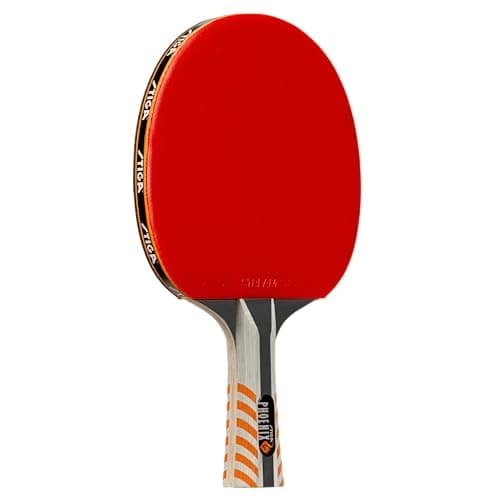 Best overall for beginners STIGA Phoenix Table Tennis Racket A control-first blade that rewards a clean stroke instead of punishing a loose one. | An adult or teenager learning properly | $34.99$39.9913% offView on Amazon |
| 2 | 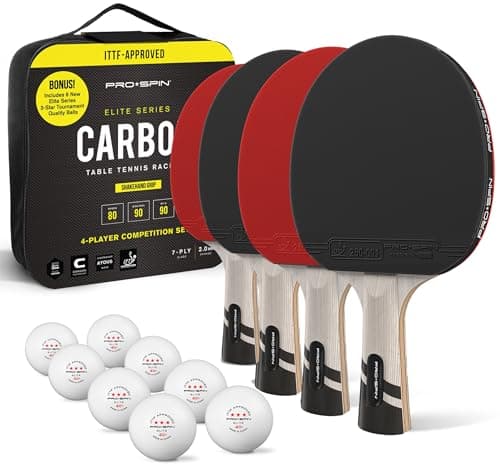 Best for a family table PRO-SPIN 4-Player Ping Pong Paddle Set Four matched paddles and balls — the sane purchase for a shared table. | A household where four people play | $89.99View on Amazon |
| 3 | 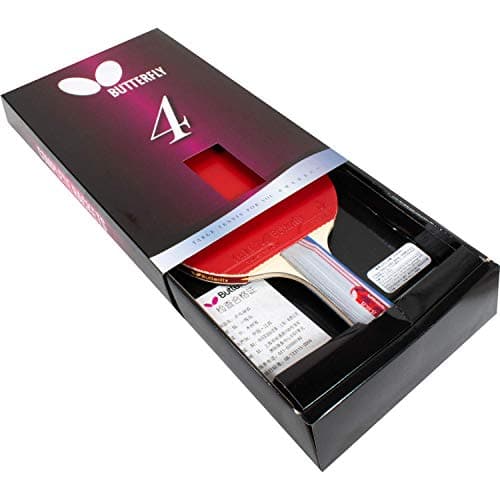 Best first step-up paddle Butterfly B401 Table Tennis Racket A proper branded blade and rubber at close to a set-bat price. | A beginner who already knows they will keep playing | Check price on Amazon |
| 4 | 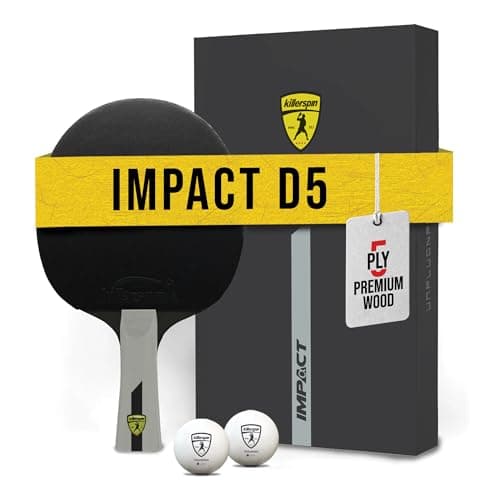 Best control-focused paddle Killerspin Impact D5 Table Tennis Paddle Deliberately slow rubber on a solid blade — the purest beginner setup. | Someone being coached, or learning strokes deliberately | $54.99View on Amazon |
| 5 | 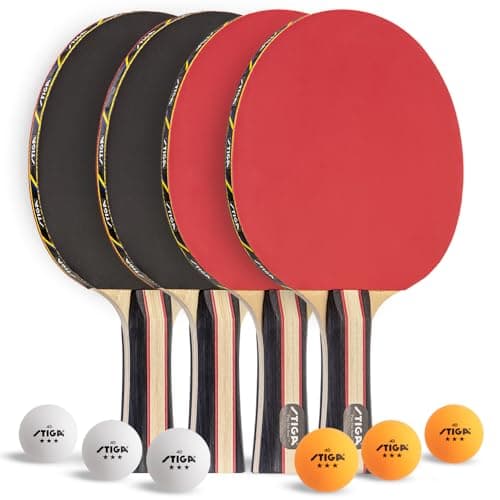 Best set for kids STIGA Performance 4-Player Table Tennis Set Four lighter bats and balls, sized for smaller hands. | Families with children under about twelve | $24.89$29.9917% offView on Amazon |
#ad · Buy links are affiliate links and we earn a commission on qualifying purchases. Prices and product photographs come from the Amazon listing itself and are refreshed daily; the date they were last checked is shown under each buy button. Where a maker does not sell through Amazon there is no product photo, and the card below says so.
1. Best overall for beginners
STIGA Phoenix Table Tennis Racket
STIGA
A beginner's problem is not a lack of speed, it is a lack of consistency, and the two are in direct tension. Fast, tacky tournament rubber amplifies everything the bat does — including the accidental spin from a wobbly stroke — so a new player sends more balls long and into the net than they would with a slower bat.
The STIGA Phoenix sits in the right place for that: enough grip to teach what spin feels like, not so much that an imperfect stroke becomes unplayable. The blade is light and balanced toward the handle, which keeps the bat head easy to square up.
This is also the right paddle to keep after the beginner stage. Players who start on a control bat and move up later tend to have cleaner technique than players who started on a fast one, because the slow bat never let them get away with a bad contact.
What we like
- Control-oriented rubber that forgives an imperfect stroke
- Light, handle-balanced blade that squares up easily
- Teaches what spin feels like without overwhelming
- Good enough to keep for a year or two of improvement
Worth knowing
- Slower than a tournament bat — a strong player will want more
- Rubber wears and eventually needs replacing
- Costs more than a bundled set bat
Who it’s wrong for
A family that wants four bats for a basement table. Buy a set and spend the difference on balls.
#ad · We earn a commission on qualifying purchases. How this is funded · Price as of November 9, 2026
2. Best for a family table
PRO-SPIN 4-Player Ping Pong Paddle Set
PRO-SPIN
If the table is in a basement and whoever walks past picks up a bat, individual paddle quality is the wrong thing to optimise. What matters is having four bats that play the same, do not warp, and are not precious enough that anyone minds using them.
A four-player set solves that at the price of one decent individual bat. Everyone gets the same equipment, doubles works, and nobody is playing with the bad bat from the bundle that came with the table.
The honest limitation is the ceiling. Set bats are moulded, and a player who improves past the social level will outgrow them within a year. That is fine — a set is the right first purchase and the individual bats above are the right second one.
What we like
- Four matched paddles, so doubles plays fairly
- Costs about what one good individual bat costs
- Balls included — the consumable nobody remembers to buy
- Nobody minds who uses which bat
Worth knowing
- A player who improves will outgrow them in a year
- Rubber is not replaceable — the bat is the unit
- Handles are generic rather than fitted to a grip
Who it’s wrong for
One person learning seriously. A single control bat will teach them more.
#ad · We earn a commission on qualifying purchases. How this is funded · Price as of November 9, 2026
3. Best first step-up paddle
Butterfly B401 Table Tennis Racket
Butterfly
There is a category between a bundled bat and a tournament bat, and the B401 is a clean example: a real Butterfly blade with real inverted rubber, assembled to a price. It plays meaningfully better than any set bat and is still cheap enough to be a sensible first purchase.
What you notice first is the contact. A proper blade transmits what happened at the ball, which is the feedback a learner needs to connect a stroke to a result. Moulded set bats mute that, which is why players on them plateau.
It is still a control-leaning bat rather than a fast one, which is right. The jump to tournament rubber is a separate decision and it should come after the strokes are repeatable.
What we like
- Real blade and real inverted rubber, not a moulded bat
- Transmits contact feel — the feedback a learner needs
- Control-leaning rather than fast
- Established brand with replaceable parts later
Worth knowing
- Only one bat — a family needs several
- Rubber wears faster than a set bat's moulded surface
- Still a step below tournament equipment
Who it’s wrong for
Occasional social play. The feel it offers is wasted on someone playing twice a year.
#ad · We earn a commission on qualifying purchases. How this is funded
4. Best control-focused paddle
Killerspin Impact D5 Table Tennis Paddle
Killerspin
If the goal is to learn correct technique rather than to win basement games this month, a slower bat is objectively better. The Impact D5 is built that way: a solid blade with low-throw, control-grade rubber that makes the ball go where the stroke sent it and nowhere else.
The effect is that mistakes are legible. A ball into the net came from a closed bat angle, not from unpredictable rubber, so the correction is obvious. On a fast tacky bat, the same stroke produces a different error each time and nothing is learnable from it.
Expect to be beaten by people with faster bats for a while. That is the trade, and it reverses after a few months.
What we like
- Genuinely slow, control-grade rubber
- Mistakes are legible — technique is correctable
- Solid blade with good feel for the price
- Comfortable handle shapes available
Worth knowing
- Slow enough to lose games against faster bats early on
- Will need replacing once technique improves
- Less fun for a purely social player
Who it’s wrong for
A casual player who wants the ball to fly. Buy something faster and enjoy it.
#ad · We earn a commission on qualifying purchases. How this is funded · Price as of November 9, 2026
5. Best set for kids
STIGA Performance 4-Player Table Tennis Set
STIGA
Adult bats are too heavy for small children in a specific way: the head is heavy relative to the hand, so the child drops the bat face and every ball goes into the net. The result reads as a child who cannot play, when it is actually a child with the wrong equipment.
A lighter four-player set fixes that for less than the price of one adult bat. Everyone in the family gets a bat, the children get something they can actually square up, and nobody is upset when one goes missing behind the table.
The usual advice applies about balls: buy a bulk box. Balls are the real consumable in a household with children, and running out is what stops a table being used.
What we like
- Lighter bats that children can square up
- Four of them, so the whole family plays
- Balls included
- Cheap enough to replace without annoyance
Worth knowing
- Too slow and too light for an adult player
- Moulded bats — no upgrade path
- Quality is per-set rather than per-bat
Who it’s wrong for
An adult learning the game. The bats are deliberately underpowered for adult strokes.
#ad · We earn a commission on qualifying purchases. How this is funded · Price as of November 9, 2026
The real decision
One bat or a set?
This matters more than which individual bat you choose, and it comes down to how the table is used.
- A basement table played by the household — buy a four-player set. Matched bats make doubles fair, nobody is stuck with the bad one, and the whole set costs about what one good bat does.
- One person learning deliberately — buy a single control bat. The feel of a real blade is the feedback that makes practice productive, and a set bat mutes it.
- Children under about twelve — buy a lighter set. Adult bats are head-heavy for small hands, which drops the bat face and sends everything into the net.
- A mixed household with one keen player — buy both. A set for everyone and one good bat the keen player keeps, which is also how arguments about the good bat get avoided.
- A table in an office or common room — buy a set and expect to replace it. Shared bats disappear; precious bats disappear faster.
Reading a paddle
The specs that actually matter
Sponge thickness. The foam layer under the rubber topsheet, measured in millimetres. Thinner means slower and more controlled. For a beginner, 1.5 to 1.8 mm is right; 2.0 mm and above is a step up, and competition bats run 2.1 mm or more.
Blade construction. A five-ply all-wood blade is the standard beginner construction and the right one. Carbon or composite layers stiffen the blade and add speed, which is the opposite of what a learner needs — and they cost considerably more to deliver it.
Handle shape. Flared handles widen at the base and suit most players; straight handles suit players who change grip mid-rally, which beginners do not. Anatomic handles are a preference. None of this affects play much, but a handle that is uncomfortable stops you practising.
ITTF approval. Printed on tournament-legal rubbers. It matters only if you intend to enter sanctioned competition, and it has no bearing on how well a bat suits a beginner.
The next bat
When to upgrade
Upgrade when the bat is the limiting factor rather than the stroke, and there is a reliable test for that: if you can place a slow topspin drive to a chosen half of the table eight times out of ten, the bat is now holding you back. Before that, a faster bat will make you worse.
The upgrade path from here is thicker sponge and grippier rubber on the same kind of blade, rather than jumping straight to a carbon tournament bat. Our picks for the next step are in best ping pong paddles.
If the limiting factor turns out to be the table rather than the bat — a bouncy top, a sagging net, a surface that is not flat — that is a different purchase, and best ping pong tables is the right page for it.
Bats are half of a beginner setup; the table is the other half, and the same logic applies to both — buy the real geometry and skip the competition specs until someone can rally. Best beginner ping pong tables covers the table side.
Questions
Common questions
What paddle should a beginner use for ping pong?
Is an expensive ping pong paddle worth it for a beginner?
What sponge thickness is best for beginners?
Should I buy one paddle or a set of four?
Do beginners need an ITTF-approved paddle?
How long does a beginner paddle last?
Sources
Keep reading
Read next