Buying guide
Why are ping pong tables so expensive?
It is a flat board on legs. Here is what the extra money is actually buying, and where it stops being worth paying.
By Ryder M. · Last updated October 4, 2026 · How we pick
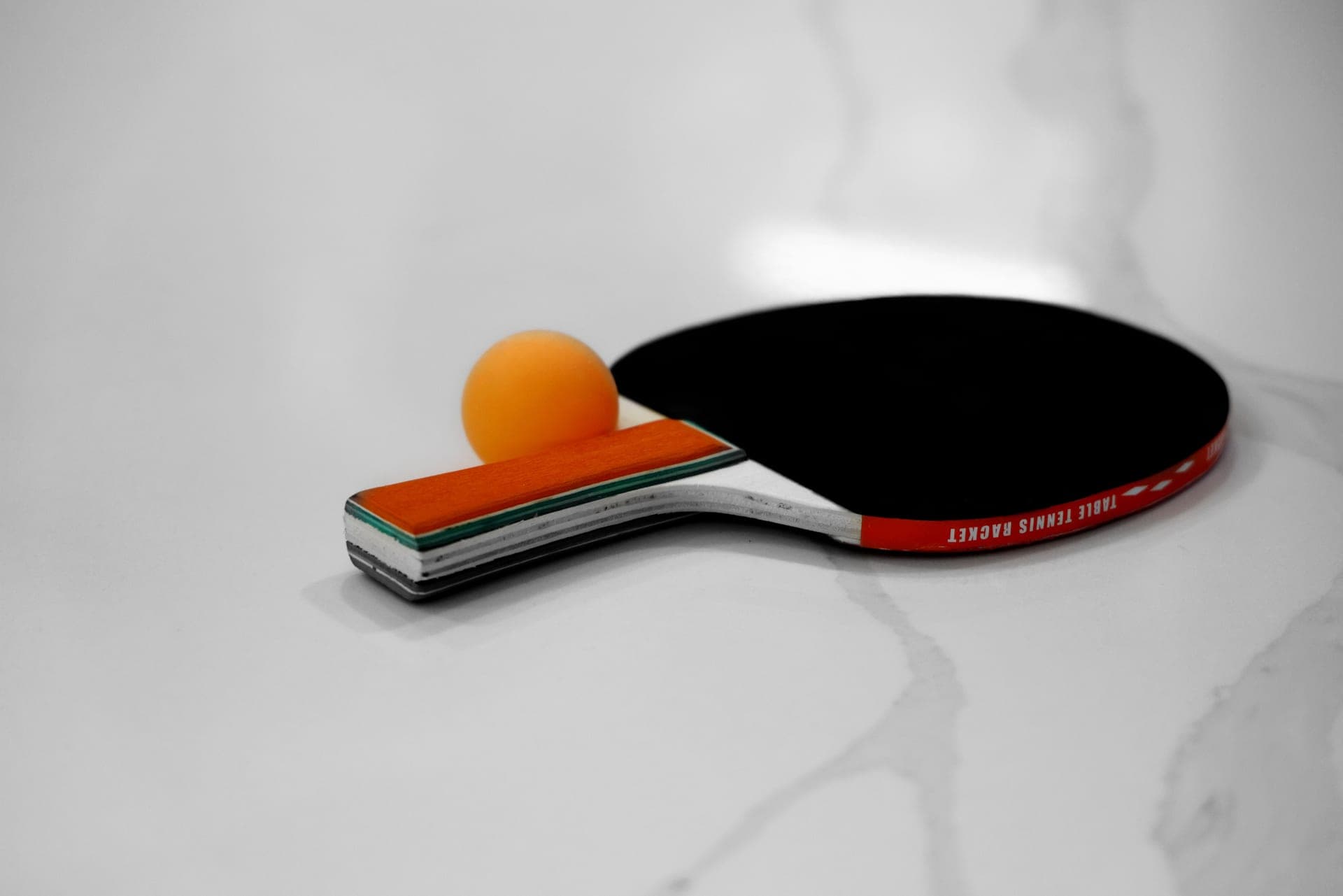
The direct answer: a ping pong table is expensive because it is a large, heavy object that has to stay perfectly flat, fold in half, roll on wheels, and survive being leaned on — and because shipping something 9ft by 5ft is costly however cheaply it is made. The money goes into four things: top thickness, frame rigidity, the folding undercarriage, and shipping. Only the first two change how the game plays.
The useful version of this question is not why tables cost what they do, but where on the ladder paying more stops improving your evenings. That point arrives earlier than the price list suggests.
Where the money goes
The four things you are paying for
| Component | What it does | Does paying more help? |
|---|---|---|
| Top thickness | Determines bounce height and consistency across the surface | Yes, up to about 19mm. Beyond that only competitive players notice |
| Frame and undercarriage | Holds the top flat and stops flex when leaned on | Yes — the most under-appreciated part of the price |
| Fold and wheel mechanism | Lets a 9ft table be stored by one person | Yes, and it decides whether the table gets used in a shared room |
| Shipping and packaging | Gets a very large, very heavy object to you undamaged | No — it is a cost, not a feature, and it is a large share of a cheap table |
| Net, paddles, finish | Accessories and appearance | Barely. All three are cheap to replace separately |
Bands and components as we researched the market in September 2026. We do not publish price figures — they move, and a stale number is worse than none. Our buy buttons show the retailer's live price.
Shipping is the part people never account for, and it explains the shape of the whole market. A table tennis table is close to the largest object a general retailer will ship to a home. That freight cost is roughly the same whether the table is good or bad, so it consumes a much larger share of a cheap table's price — which is exactly why the cheapest tables feel disproportionately poor for the money, and why the step up to the next band buys so much more than the price difference suggests.
The main variable
Top thickness is where the bounce comes from
Thickness is the single specification that changes the game. A thin top absorbs energy from the ball and returns a low, slightly dead bounce, and because thin panels flex, the bounce is not the same in the middle as at the edges. A thick top returns a higher, more consistent bounce everywhere on the surface.
- 12-15mm — entry level. Playable, low bounce, noticeably uneven near the middle. Fine for children and casual games.
- 16-19mm — the family sweet spot. Even bounce, no obvious dead spots, and the point where most people stop noticing the table.
- 22-25mm — competition specification. Measurably better, and the difference is only exploitable by a player with technique to exploit it.
- Outdoor tops are a different material entirely — aluminum composite rather than chipboard — and are priced on weather resistance, not bounce.
The full comparison is in 15mm vs 25mm tops. The short version: 19mm is the number to aim for in a family house, and paying past it is paying for a specification nobody in the room can use.
Quick picks
Tap any row to jump to the full write-up.
| # | Product | Best for | Price |
|---|---|---|---|
| 1 | 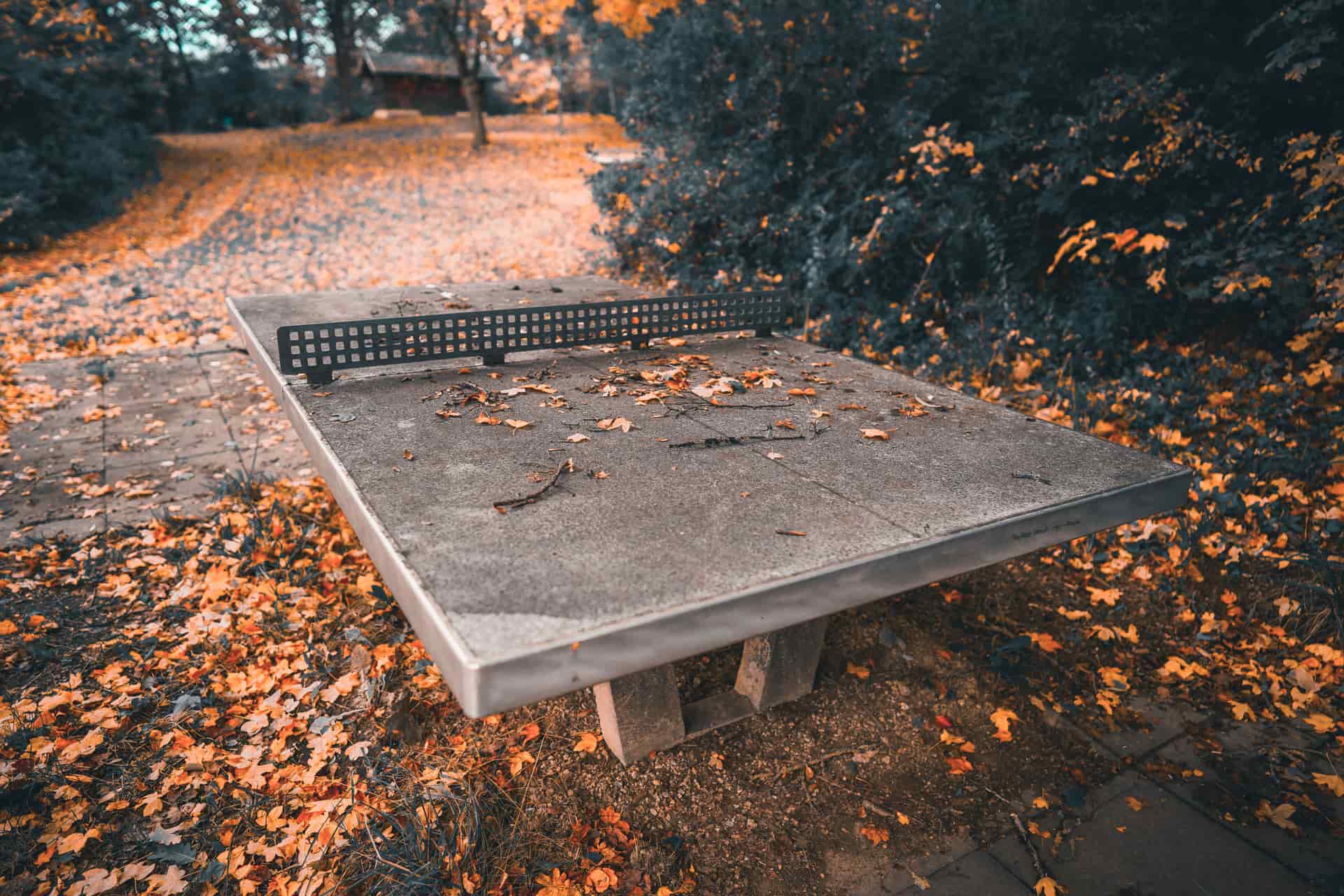 Where the ladder starts MD Sports 4-Piece Table Tennis Table Full size, thin top, basic everything — and it genuinely plays table tennis. | Finding out whether the household will use a table | Check price on Amazon |
| 2 |  The value sweet spot STIGA Advantage Table Tennis Table The band where the frame, the wheels and the bounce all become adequate at once. | Most households buying a table they intend to keep | Check price on Amazon |
| 3 | Where the money goes at the top Killerspin MyT7 BlackStorm Table Competition-grade top and undercarriage — and the point where gains get small. | Clubs, serious players, and rooms where the table is on display | Check price on Amazon |
#ad · Buy links are affiliate links and we earn a commission on qualifying purchases. Photographs are licensed images of the category, not of the individual unit — see each retailer listing for the product’s own photography.
1. Where the ladder starts
MD Sports 4-Piece Table Tennis Table
MD Sports
At the bottom of the range you get the full footprint and a thin top, and the bounce is lower and less even than a better table. That is a real difference, and it is also not a reason to avoid this band if the question you are answering is whether anybody in the house will play.
What you are not paying for: frame rigidity, a consistent bounce across the whole surface, and a net worth using. All three are noticeable. None of them stop a family rally.
What we like
- Full regulation footprint at the lowest price
- Four pieces, so one adult can store it
- Low-risk way to test whether the table gets used
- Takes garage conditions tolerably
Worth knowing
- Low, uneven bounce from a thin top
- Flexible frame
- Net and bundled paddles are poor
Who it’s wrong for
Anybody who already knows they will play regularly. Spend one band up.
#ad · We earn a commission on qualifying purchases. How this is funded
2. The value sweet spot
STIGA Advantage Table Tennis Table
STIGA
This is the step worth taking, and it is the only step on the ladder we would argue is close to essential. Moving up from the entry band buys a thicker top with a noticeably more even bounce, a frame that does not flex when the table is leaned on, and locking wheels that make the rollaway mechanism genuinely usable rather than nominally present.
Those three together change the table from something that works into something that gets used. Everything above this band is refinement of a table that is already good.
What we like
- Thicker top with a markedly more even bounce
- Rigid frame that survives being leaned on
- Locking wheels and a rollaway fold that actually works
- The clearest value step on the whole ladder
Worth knowing
- Still not a competition-specification top
- Net is adequate rather than good
- Heavier to move than an entry table
Who it’s wrong for
A room that cannot take a full-size table. Size beats specification every time.
#ad · We earn a commission on qualifying purchases. How this is funded
3. Where the money goes at the top
Killerspin MyT7 BlackStorm Table
Killerspin
At the top of the range you are paying for a thick competition-specification top, a heavy steel undercarriage that holds it dead flat, and finish and hardware built to survive constant use. All of it is real engineering and all of it is measurable.
It is also where the returns flatten. The difference between this and the value band is smaller than the difference between the value band and the entry band, despite costing far more. For a club or a player training seriously it is justified; for a family room it is a lot of money for a bounce nobody in the house can exploit.
We are saying that about a product we would earn more from. It is still the right advice for most readers.
What we like
- Competition-specification top with a consistently high bounce
- Heavy undercarriage that keeps the surface flat for years
- Hardware and finish built for constant use
- Holds its value better than any band below it
Worth knowing
- The largest price step for the smallest improvement
- Heavy — moving it is a two-person job
- Wasted on casual family play
Who it’s wrong for
A household that plays a few times a month. The value band is the better buy.
#ad · We earn a commission on qualifying purchases. How this is funded
The exception
Why outdoor tables cost more
Outdoor tables look like indoor tables and cost considerably more, which seems backwards until you look at the top. An indoor top is coated chipboard and it is destroyed by one rain shower. An outdoor top is an aluminum or melamine composite bonded to a weatherproof core, on a galvanized or powder-coated frame with weather-resistant hardware throughout.
You are paying for materials that survive outside, not for a better game — most outdoor tops have a slightly lower bounce than a good indoor one. If the table will live outdoors, that premium is unavoidable and worth paying; if it will live in a garage, it usually is not. Our outdoor roundup covers which is which, and the garage guide covers the middle case.
Advice
How to spend the least and enjoy it most
- Buy the size the room takes, first. A specification you cannot fit is worth nothing. Start with the room size guide.
- Aim for a 16-19mm top. That is the band where the bounce stops being the limiting factor.
- Spend on the frame, not the finish. Frame flex is what makes a table feel cheap, and it is what fails first.
- Ignore the bundled paddles. They are the cheapest component in the box on every table at every price. Budget separately — see best ping pong paddles.
- Consider a conversion top if you already own a suitable table. It removes most of the cost drivers on this page.
- Buy used if you can collect it. Tables are cheap second-hand precisely because they are awkward to move, which works in your favor.
For the band-by-band version of the same question with the costs that do not appear on the listing, see what a ping pong table costs.
Questions
Common questions
Why are ping pong tables so expensive?
How much should you spend on a ping pong table?
Is an expensive ping pong table worth it?
Why are outdoor ping pong tables more expensive than indoor ones?
What is the cheapest way to get a good ping pong surface?
Keep reading
Read next