Guide
How to set up a ping pong table
Assembly, leveling, net tension and where to put it. Most tables that play badly are set up badly, not built badly.
By Ryder M. · Last updated September 27, 2026 · How we pick
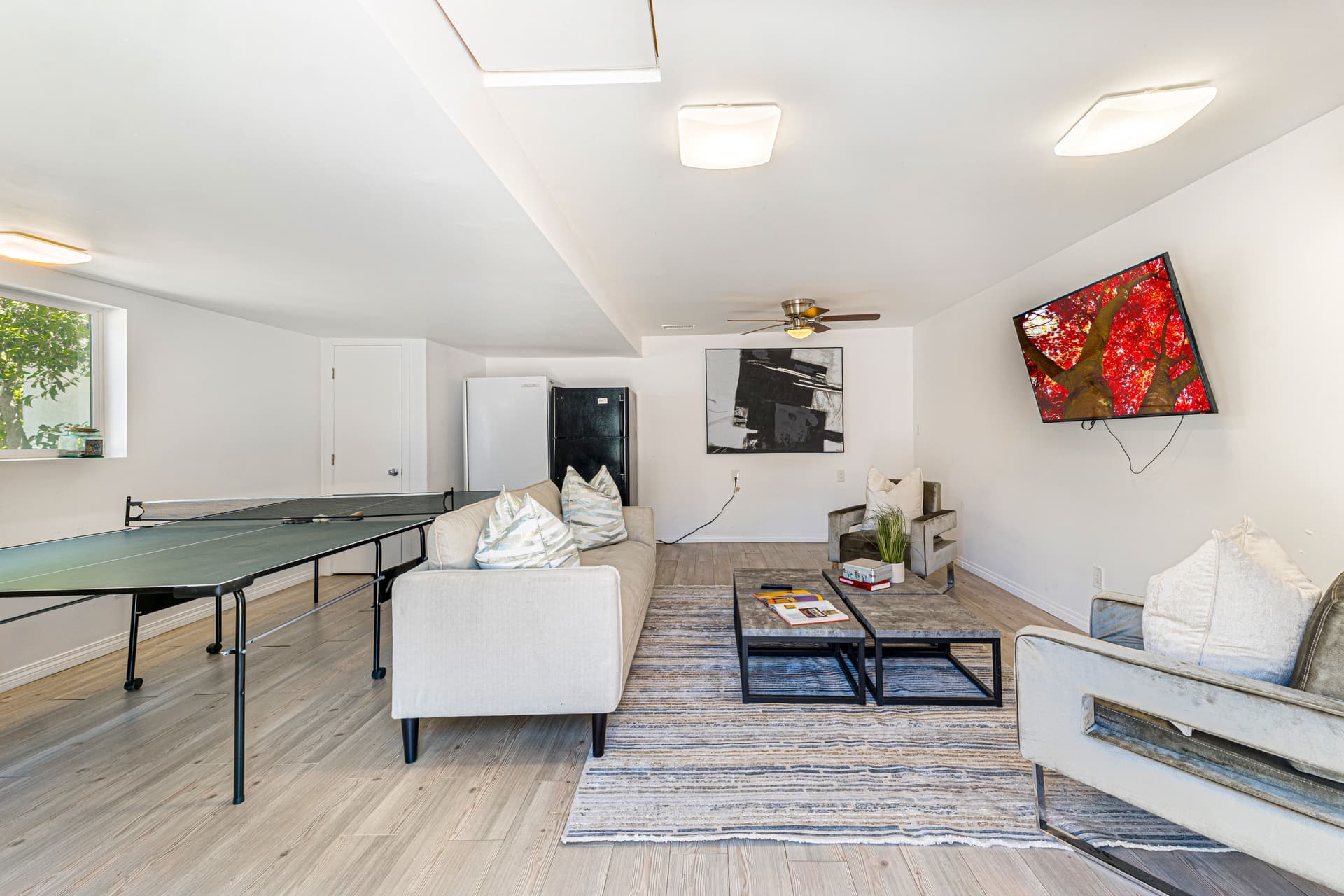
Short answer: assemble the frame fully before attaching the top, level the table with its feet before anyone plays on it, set the net to exactly 6 inches high with even tension, and leave run-back space at both ends rather than centering the table in the room. Most tables that play badly are set up badly.
Preparation
Before you start
- Unbox in the room where the table will live. A full-size table assembled elsewhere frequently will not go through the door. This is the single most common assembly disaster.
- Check the delivery route first — doorway widths, stair turns, landing space. Folded rollaway tables are tall and awkward rather than heavy.
- Have a second person. Most full-size tables specify two people, and it is not caution — the halves are unwieldy and it is easy to damage an edge alone.
- Lay out the hardware and count it against the parts list before you begin. A missing bolt found at step three is much easier to resolve than one found at step eleven.
- Work on carpet or cardboard. Table edges chip easily and the damage is permanent and visible.
The process
Assembly, in order
- Build the undercarriage first, on the floor, upside down. Frame, legs, castors, cross-supports. Leave every bolt finger-tight until the whole frame is together, then tighten in sequence — this lets the frame self-align rather than binding.
- Attach the top to the frame with the top still face down on padding. Tighten the fixings evenly, working from the center outward, so the top is not pulled into a curve.
- Turn it over with two people, one at each end. Never lever a table upright from one end; that is how frames get twisted.
- Lock the castors before doing anything else. A table on unlocked castors moves while you are working on it.
- Level it. See below — this is the step people skip and the one that matters most.
- Fit the net last, with the two halves already aligned and locked together.
Quick picks
Tap any row to jump to the full write-up.
| # | Product | Best for | Price |
|---|---|---|---|
| 1 | Easiest to set up STIGA Advantage Table Tennis Table Arrives largely pre-assembled — one of the quickest in the category. | Anyone who wants to be playing the same afternoon | Check price on Amazon |
| 2 |  The tool worth having JOOLA Table Tennis Net and Post Set A net with a proper tension adjustment makes leveling the net trivial. | Any table whose bundled net has started to sag | Check price on Amazon |
| 3 |  Solo practice setup iPong Trainer Table Tennis Robot Turns a correctly set up table into a practice space for one. | Anyone practicing alone regularly | Check price on Amazon |
#ad · Buy links are affiliate links and we earn a commission on qualifying purchases. Photographs are licensed images of the category, not of the individual unit — see each retailer listing for the product’s own photography.
1. Easiest to set up
STIGA Advantage Table Tennis Table
STIGA
Assembly time varies enormously between tables and it is rarely mentioned on listings. This one is among the quicker full-size tables to get from box to playable.
What we like
- Mostly pre-assembled
- Light enough for two people
- Clear instructions
- Folds immediately after
Worth knowing
- Thin top
- Light frame
- Indoor only
Who it’s wrong for
Anyone prioritizing play quality over setup convenience.
#ad · We earn a commission on qualifying purchases. How this is funded
2. The tool worth having
JOOLA Table Tennis Net and Post Set
JOOLA
The net is the component most often set up wrong and the one that most affects play. A net with real tension adjustment and a clamp that grips properly solves both.
What we like
- Proper tension adjustment
- Firm clamps
- Cheap
- Fits most tables
Worth knowing
- Check clamp width
- Not weatherproof
- Another thing to store
Who it’s wrong for
A brand new table whose net is still taut.
#ad · We earn a commission on qualifying purchases. How this is funded
3. Solo practice setup
iPong Trainer Table Tennis Robot
iPong
Once the table is set up properly, a ball feeder is what makes solo practice productive rather than just hitting against a folded half.
What we like
- Consistent feed
- Adjustable speed and frequency
- Clamps to the table
- Good for drilling
Worth knowing
- Needs a net or catch to avoid chasing balls
- Battery or mains power
- Another item to store
Who it’s wrong for
Casual family play — it is a practice tool, not a game.
#ad · We earn a commission on qualifying purchases. How this is funded
The step people skip
Leveling the table
No floor is flat, and a table that is not level does something specific and annoying: the ball drifts toward one side on slow rolls, and the two halves sit at slightly different heights so the bounce changes across the net.
- Put a spirit level across the width of each half in turn, then along the length.
- Adjust the feet, which almost every full-size table has, until both halves read level individually.
- Then check across the join. This is the one that matters — if the two halves are level but at different heights, the net line has a step in it.
- Roll a ball slowly from one end. It should track straight. If it curves consistently, adjust the feet on the side it curves toward.
The detail that changes the game
Setting the net correctly
The net should be 6 inches (15.25cm) high across its whole length and 6 feet wide, overhanging the table by 6 inches each side — the ITTF figures. A sagging middle is the most common fault and it makes the net effectively lower in the place the ball crosses most often.
- Clamp both posts firmly and squarely to the table edge before tensioning.
- Tension the cord until the net is taut with no sag at the center, then measure at the center rather than at the posts.
- The bottom of the net should just touch the table along its full width. A gap lets the ball through; a net pressed hard into the surface stretches over time.
- Re-check the height after a week. Nets relax, and almost nobody re-checks.
Positioning
Where to put it in the room
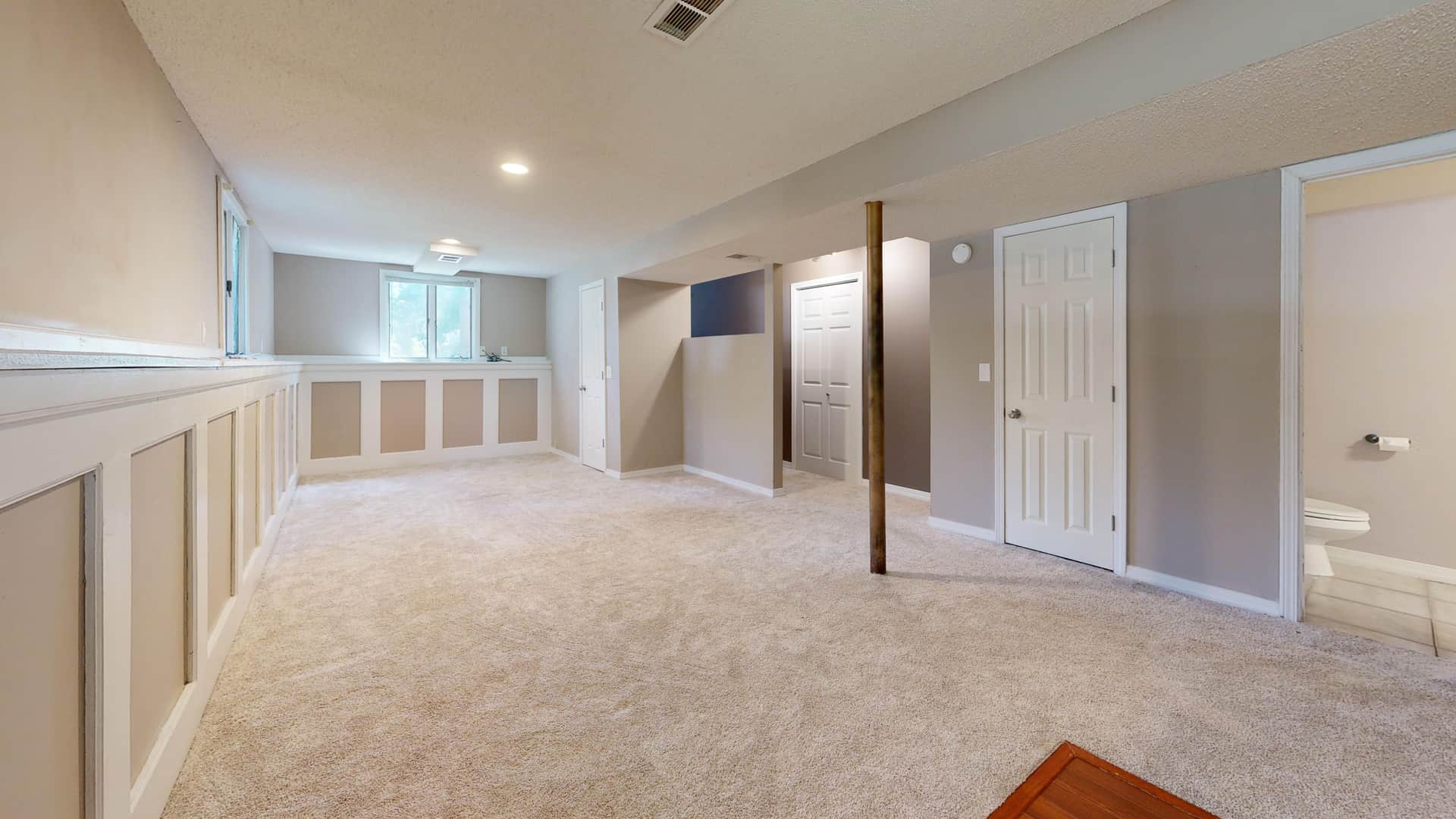
Prioritize run-back at the ends over clearance at the sides. Players move backwards to reach deep balls far more than they move sideways, so a table pushed toward one long wall plays almost normally while a table with no space behind the ends does not. Our room size guide has the figures.
Two other positioning points worth getting right. Keep the table out of direct sunlight if you can — glare off a glossy top is genuinely difficult to play through, and sun fades the surface over time. And think about the background behind each end: a plain wall makes the ball far easier to track than a window or a cluttered shelf.
Questions
Common questions
How do you set up a ping pong table?
How high should a ping pong net be?
Do you need to level a ping pong table?
How long does it take to assemble a ping pong table?
Can one person set up a ping pong table?
Sources
Keep reading
Read next