Explainer
How air hockey tables work
One fan, several thousand holes, and the reason a big cheap table plays worse than a small good one.
By Ryder M. · Last updated September 27, 2026 · How we pick

Short answer: a fan under the table pushes air up through thousands of small holes in the playing surface. That air lifts the puck a fraction of a millimeter off the surface, removing almost all friction. Strong airflow, the puck floats and the game feels like the arcade. Weak airflow, it drags — and that is the entire difference between a good table and a disappointing one.
How it works
The three components
The blower
An electric fan motor sits inside the cabinet, usually underneath the center of the playing field, pushing air into the sealed space between the playing surface and the cabinet floor. That space pressurizes, and the only way out is through the holes.
The critical point is that a bigger surface needs a proportionally bigger motor — more holes to feed and more area to pressurize. A large table with a small motor produces weak, uneven airflow, which is why an oversized cheap table plays worse than a well-matched small one.
The hole pattern
Thousands of small holes are drilled through the playing surface in a regular grid. Two things matter: that they are evenly spaced and drilled cleanly, and that they stay clear. Uneven drilling creates dead spots where the puck loses lift, and blocked holes do the same thing locally.
This is also why a scratched surface is a real problem rather than a cosmetic one. Deep scratches disrupt the cushion of air and add friction that airflow cannot overcome.
The puck
Pucks are molded plastic with a flat, smooth underside and a slight lip around the edge. The flat face traps the air beneath it; the weight is tuned so the puck floats without lifting off and flying. This is why a chipped or warped puck plays badly even on a perfect table, and why pucks are worth replacing when they start to look rough.
Quick picks
Tap any row to jump to the full write-up.
| # | Product | Best for | Price |
|---|---|---|---|
| 1 | 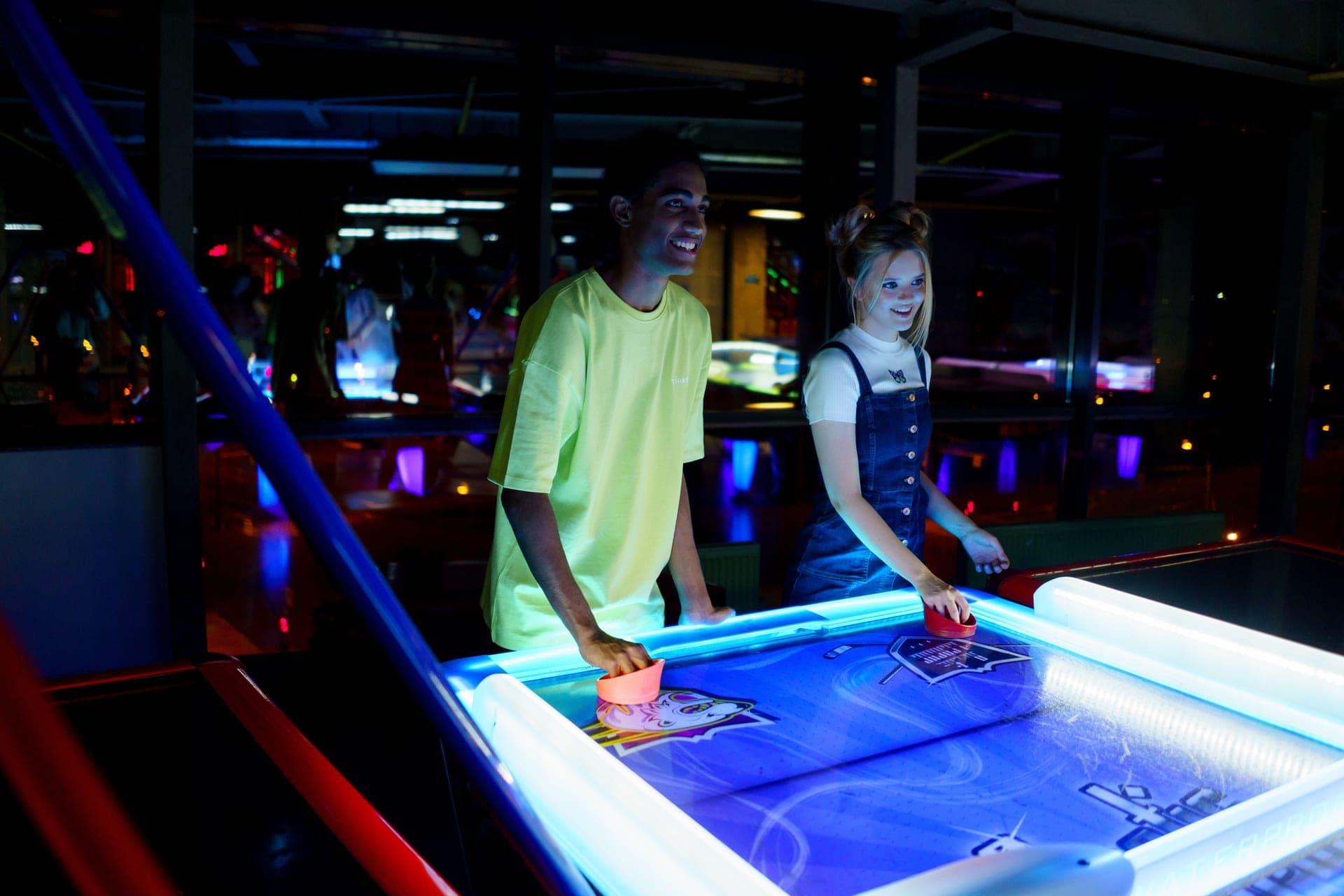 A table with airflow to match its size Atomic Blazer 7 ft Air Hockey Table 7ft with a motor specified for it — the combination that matters. | Adults and families who want the game to feel right | Check price on Amazon |
| 2 | 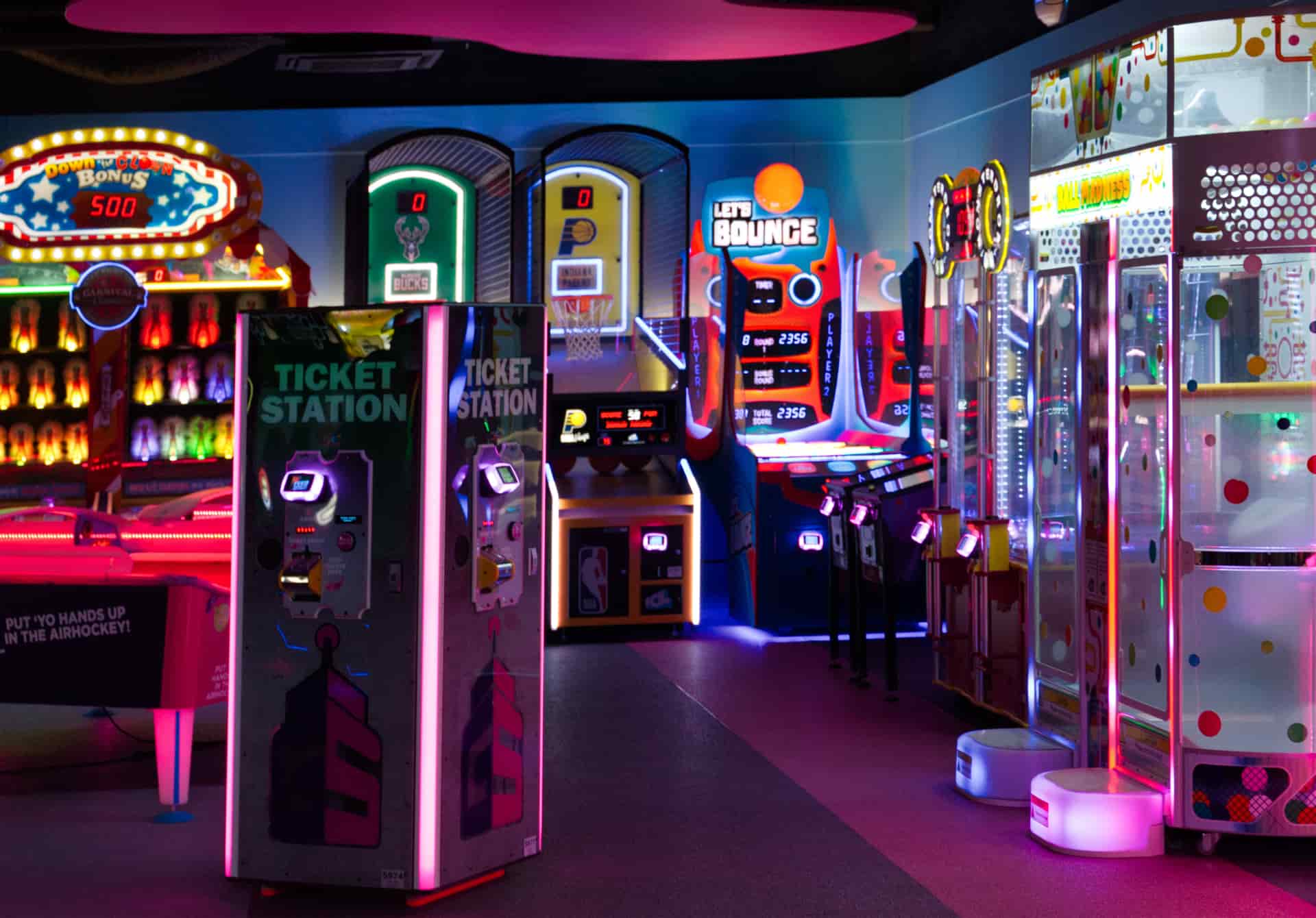 The commercial version Valley-Dynamo Pro Style Air Hockey Table A genuinely strong blower and a properly sealed surface. | Anyone who wants the arcade feel exactly | Check price on Amazon |
| 3 |  Where weak airflow is fine Hathaway Face-Off 5 ft Air Hockey Table At children's sizes, airflow genuinely stops being the constraint. | Children | Check price on Amazon |
#ad · Buy links are affiliate links and we earn a commission on qualifying purchases. Photographs are licensed images of the category, not of the individual unit — see each retailer listing for the product’s own photography.
1. A table with airflow to match its size
Atomic Blazer 7 ft Air Hockey Table
Atomic (Escalade Sports)
The point of this page is that size and blower must move together. This is what that looks like.
What we like
- Matched size and airflow
- Even hole pattern
- Clean rails
- Known brand
Worth knowing
- Loud
- Large
- Heavy
Who it’s wrong for
A small room or a household of only young children.
#ad · We earn a commission on qualifying purchases. How this is funded
2. The commercial version
Valley-Dynamo Pro Style Air Hockey Table
Valley-Dynamo
Commercial tables are where the airflow difference is most obvious — the puck sits visibly higher.
What we like
- Commercial blower
- Sealed, even surface
- Arcade-grade rails
- Built to last
Worth knowing
- Expensive
- Very heavy
- Very loud
Who it’s wrong for
Casual family use.
#ad · We earn a commission on qualifying purchases. How this is funded
3. Where weak airflow is fine
Hathaway Face-Off 5 ft Air Hockey Table
Hathaway
A short surface and a light hitter mean puck drag never gets a chance to spoil the game.
What we like
- Right size for children
- Sturdy
- Affordable
- Parts available
Worth knowing
- Short for adults
- Basic scoring
- Smaller motor
Who it’s wrong for
Adults.
#ad · We earn a commission on qualifying purchases. How this is funded
The diagnosis
Why cheap tables feel slow
| Symptom | Cause | Fixable? |
|---|---|---|
| Puck drags across the whole table, from new | Blower undersized for the surface | No — it is how the table was built |
| Puck drags in patches | Blocked or unevenly drilled holes | Usually yes — clean the surface and clear the holes |
| Puck slowed down over time | Surface scratches, or dust in the holes | Partly — cleaning helps, scratches do not |
| Puck lifts and flies off | Airflow too strong for a light or worn puck | Yes — use a correctly weighted puck |
| One end slower than the other | Table not level, or the blower is off-center | Level the table first |
Maintenance
How to keep a table fast
- Wipe the surface regularly with a slightly damp cloth. Dust, skin oils and spilled drinks all add friction.
- Clear the holes. A vacuum over the surface with the blower off, or the blower on to push debris out, clears most blockages. Do not poke anything into the holes — you will widen them unevenly.
- Keep grit off it. Most scratches come from something hard being dragged across the surface, not from the pucks.
- Replace tired pucks. They are cheap, and a chipped puck plays badly on any table.
- Level the table. An unlevel surface makes one direction feel faster than the other, which is often misdiagnosed as an airflow problem.
- Turn it off when not in use. Blower motors have a finite life and running one unnecessarily is the fastest way to reach it.
Questions
Common questions
How do air hockey tables work?
Why does my air hockey puck slow down?
Can you fix weak airflow on an air hockey table?
Do air hockey tables have to stay plugged in?
Why is my air hockey puck flying off the table?
Keep reading
Read next