Comparison
Ping pong table thickness: 15mm vs 25mm
One number explains most of the price ladder in table tennis. Here is what it changes and where it stops mattering.
By Ryder M. · Last updated September 27, 2026 · How we pick
Short answer: 25mm is tournament standard and genuinely plays best, but 18mm is the right buy for most households — the improvement from 18mm to 25mm is far smaller than the improvement from 13mm to 18mm, and it costs much more. Below 15mm the bounce goes noticeably dead.
The physics
What top thickness actually does
When a ball lands, some of its energy goes into deflecting the table surface and does not come back. A thicker, denser top deflects less, so more of that energy returns to the ball. That is the entire mechanism, and it produces three effects you can actually perceive.
- Bounce height. Thicker tops return the ball higher and more predictably, which keeps rallies going.
- Consistency across the surface. Thin tops flex more toward the middle of each half than at the supported edges, so the bounce varies depending on where the ball lands. Thick tops are uniform.
- Sound. A thick top makes a sharp crack; a thin one sounds hollow. It is not a performance factor, but it strongly affects how good a table feels.
The numbers
The thickness ladder
| Thickness | Where you find it | How it plays | Who it suits |
|---|---|---|---|
| 12-13mm | Budget and outdoor tables | Low, dead bounce; rallies die early | Children, very occasional play |
| 15-16mm | Entry full-size indoor tables | Acceptable but noticeably softer than mid-range | Casual family play |
| 18-19mm | Mainstream mid-range tables | Consistent, lively bounce across the surface | Most households — the sweet spot |
| 22mm | Upper mid-range | Very close to tournament feel | Enthusiasts and improving players |
| 25mm | Tournament-grade tables | Highest, most uniform bounce; used in competition | League and club players |
Outdoor tables are measured differently — an aluminum-composite outdoor top of 4-6mm is not comparable to a wood-based indoor top and plays firmer and faster by design.
The honest bit
Where the returns stop
The gap between 13mm and 18mm is the difference between a table that frustrates people and one that does not. The gap between 18mm and 25mm is the difference between a very good table and a marginally better one, and it typically costs more than the first gap did.
For a household where nobody plays competitively, paying for 25mm is a reasonable indulgence rather than a sensible purchase. The same money spent on 18mm plus good paddles will produce a better experience for everyone in the house.
Quick picks
Tap any row to jump to the full write-up.
| # | Product | Best for | Price |
|---|---|---|---|
| 1 | 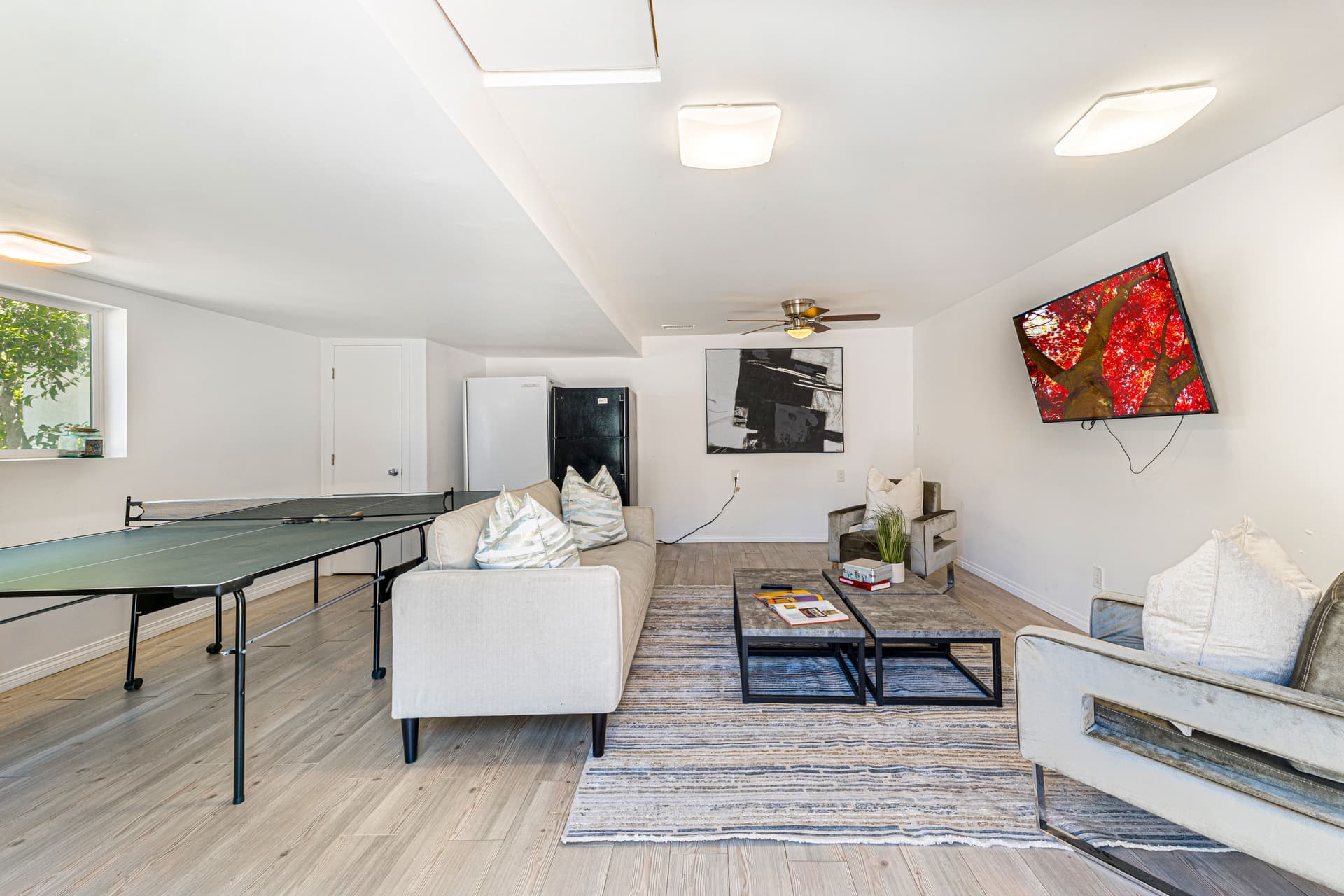 Best 25mm table JOOLA Tour 2500 Table Tennis Table Tournament thickness with the frame to support it. | Households with a league or club player | Check price on Amazon |
| 2 | Best 18mm table JOOLA Tour 1800 Table Tennis Table The middle of the ladder, and where most households should buy. | Family play with someone decent in the house | Check price on Amazon |
| 3 | Best entry-thickness table STIGA Advantage Table Tennis Table A thinner top, honestly, and fine for the household it suits. | Casual family rallies on a tight budget | Check price on Amazon |
#ad · Buy links are affiliate links and we earn a commission on qualifying purchases. Photographs are licensed images of the category, not of the individual unit — see each retailer listing for the product’s own photography.
1. Best 25mm table
JOOLA Tour 2500 Table Tennis Table
JOOLA
If the comparison on this page lands on 25mm for you, this is a clean example: tournament-standard thickness on a frame heavy enough that the top is not wasted.
Bear in mind the frame is half the story. A thick top on a flexing frame plays worse than a thinner top on a rigid one, particularly near the net.
What we like
- 25mm tournament thickness
- Heavy steel frame
- Rollaway and playback
- Consistent to the edges
Worth knowing
- Expensive
- Heavy
- More table than casual play needs
Who it’s wrong for
Casual family play — the premium buys an increment only practiced players perceive.
#ad · We earn a commission on qualifying purchases. How this is funded
2. Best 18mm table
JOOLA Tour 1800 Table Tennis Table
JOOLA
Eighteen millimeters is where the bounce becomes properly consistent and the table stops sounding hollow. For the overwhelming majority of homes, this is the right number.
The step up from here to 25mm is real but small; the step down to 13mm is large. That asymmetry is the whole argument for buying at this level.
What we like
- Consistent bounce across the surface
- Sensible price
- Rollaway and playback
- The best balance in the category
Worth knowing
- Not tournament thickness
- Indoor only
- Two-person assembly
Who it’s wrong for
A competitive player training seriously at home.
#ad · We earn a commission on qualifying purchases. How this is funded
3. Best entry-thickness table
STIGA Advantage Table Tennis Table
STIGA
A thinner top plays a lower, quieter game. Side by side against an 18mm table the difference is obvious; on its own, for casual play, it is perfectly enjoyable.
Buy this knowing what it is. The mistake is buying it and then being disappointed that it does not play like a club table.
What we like
- Full size
- Cheapest route to a real table
- Rollaway with playback
- Quick assembly
Worth knowing
- Lower, deader bounce
- Lighter frame
- Noticeable beside a thicker table
Who it’s wrong for
Anyone who has played in a club.
#ad · We earn a commission on qualifying purchases. How this is funded
Frames
The specification that matters just as much
Thickness is not the only thing determining bounce, and manufacturers know that buyers fixate on it. A thick top on a light, flexing frame is a worse table than a thinner top on a rigid one, because the frame flexes under the top near the net where most of the play happens.
Practical check: look at the frame tube size, the number of cross-supports under each half, and the overall weight of the table. If a table claims a thick top and weighs the same as a thin-top competitor, something is being economized somewhere.
Questions
Common questions
Is a 25mm ping pong table worth it?
What is the minimum ping pong table thickness for home use?
Does table thickness affect spin?
Why are outdoor ping pong tables thinner?
Sources
Keep reading
Read next