Sizing guide
How much space do you need for a dartboard?
Less than you think in width, more than you think in depth. Plus how to make a hallway work.
By Ryder M. · Last updated September 27, 2026 · How we pick
The direct answer: you need about 11 feet of clear depth in front of the board — the 7ft 9¼in throw distance plus room to stand and step back — and around 5 feet of width, ideally centered on the board. Ceiling height is rarely a constraint: anything over about 7 feet works.
That depth figure is the one people underestimate. The throw distance is measured to the line, but nobody stands with their toes exactly on it and nothing behind them.
The numbers
The space you need
| Dimension | Minimum | Comfortable | Why |
|---|---|---|---|
| Depth from board face | About 9ft | About 11ft | 7ft 9¼in throw plus standing and stepping room |
| Width, centered on the board | About 4ft | About 5ft | Throwing arc plus room for a second player to stand aside |
| Clearance either side of board | About 2ft | About 2ft 6in | Stray darts and the arc of the throwing arm |
| Ceiling height | About 7ft | 8ft+ | Rarely a constraint; the throw is flat, not lobbed |
| Clearance below the board | About 2ft | About 2ft | Dropped darts, and room for a surround or cabinet |
Based on the WDF steel-tip throw distance of 7ft 9¼in. Soft-tip play needs a few inches more depth, since the throw line sits at about 8ft.
The shape of the space
Why depth matters more than width
Darts is played along a line rather than across an area. One player throws, then steps back while the other steps up. That means the space wants to be long and narrow rather than square — which is why a hallway is a surprisingly good dartboard location and a wide shallow room is a poor one.
The width you do need is for the throwing arc and for the other player to stand clear. Two feet either side of the board is the practical minimum, and it keeps stray darts away from furniture.
Quick picks
Tap any row to jump to the full write-up.
| # | Product | Best for | Price |
|---|---|---|---|
| 1 | For a tight space Viper Defender Dartboard Surround In a narrow room, wall protection matters more, not less. | Hallways and rooms where walls are close | Check price on Amazon |
| 2 | 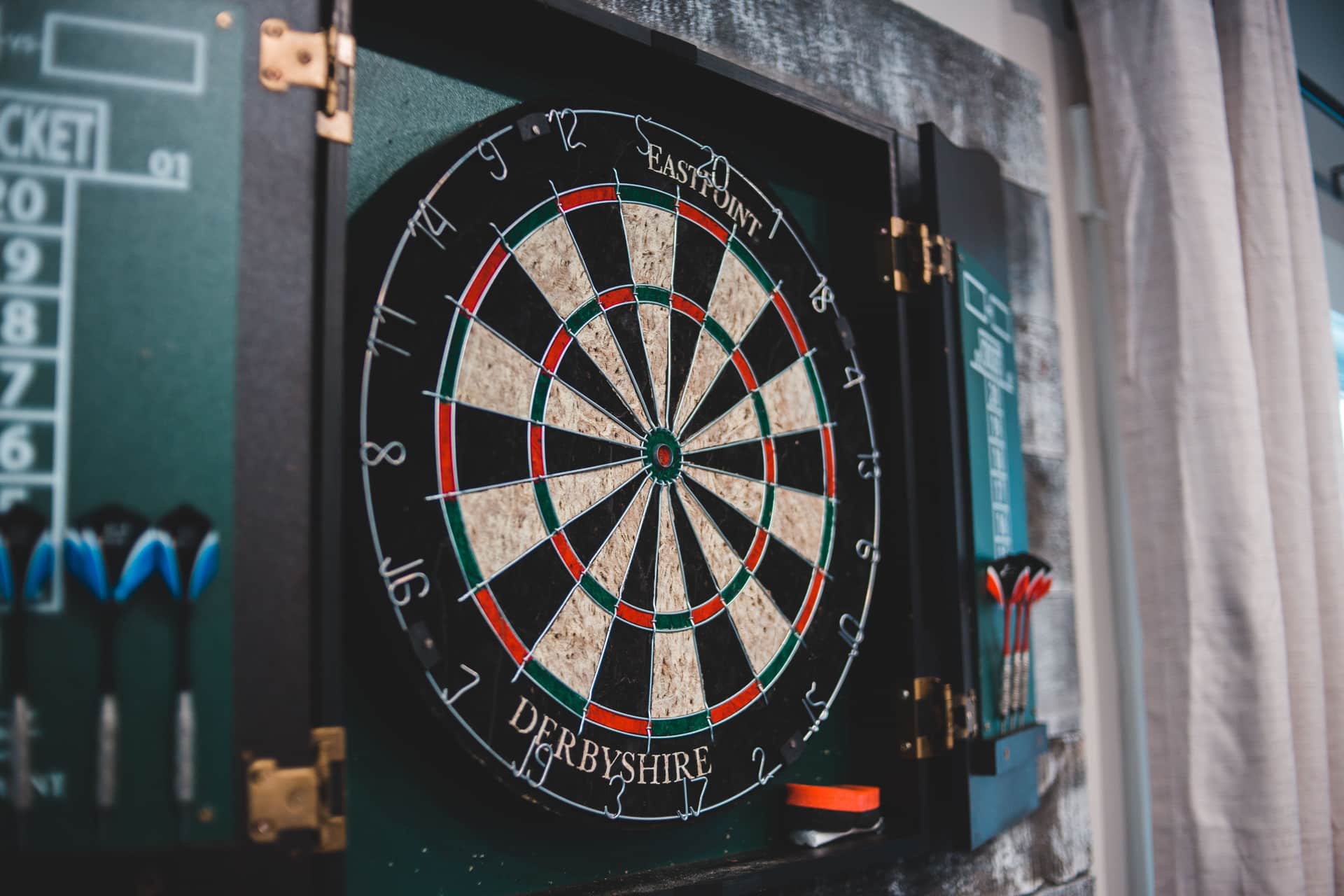 For a shared room Viper Metropolitan Dartboard Cabinet Closes up when the room needs to be something else. | Living rooms and multi-use spaces | Check price on Amazon |
| 3 | 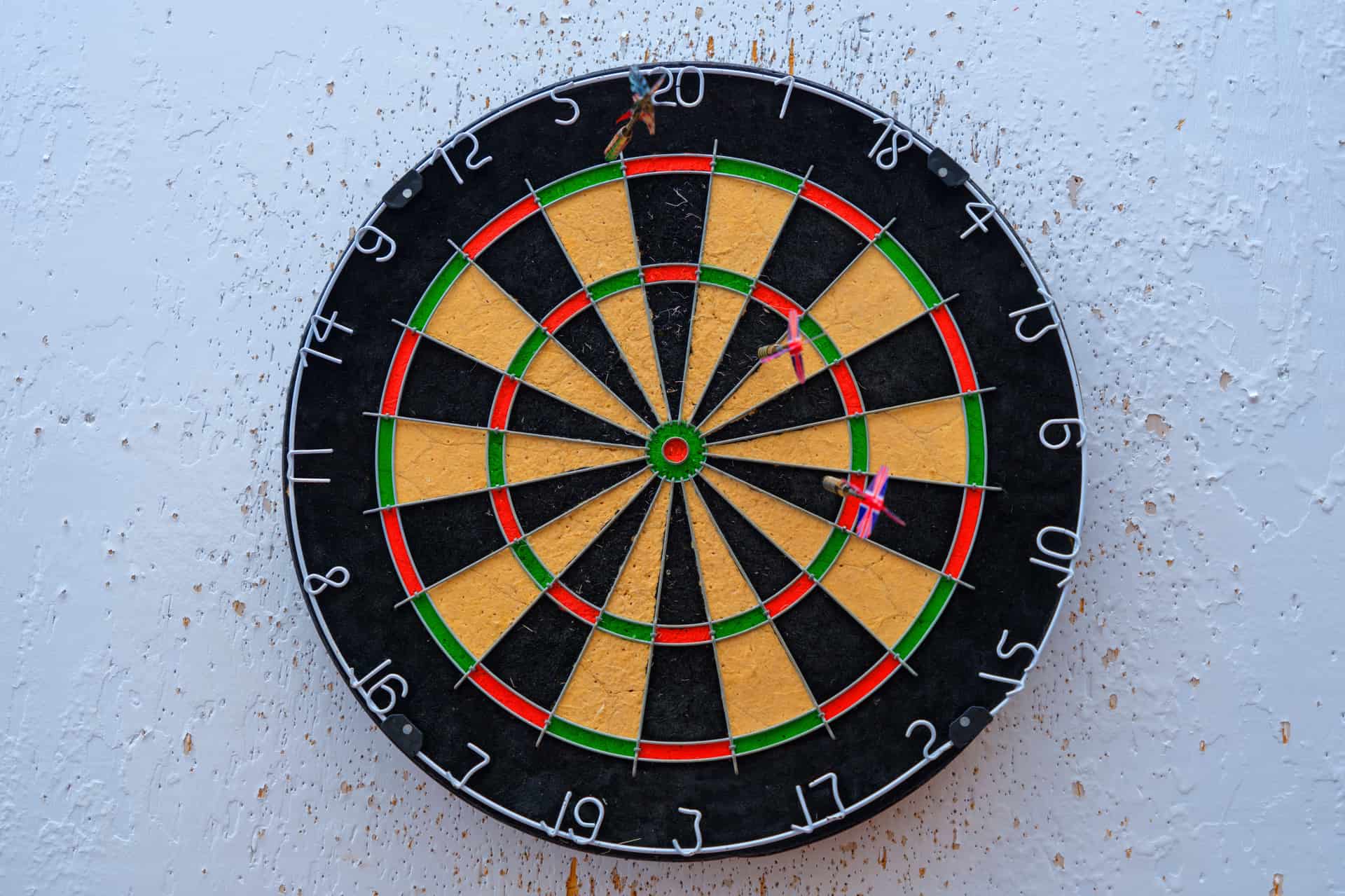 For a narrow room Viper 777 Electronic Dartboard Soft tips do far less damage when the walls are close. | Hallways and tight rooms | Check price on Amazon |
#ad · Buy links are affiliate links and we earn a commission on qualifying purchases. Photographs are licensed images of the category, not of the individual unit — see each retailer listing for the product’s own photography.
1. For a tight space
Viper Defender Dartboard Surround
Viper (GLD Products)
The tighter the space, the more likely a stray dart finds a wall. A surround is the minimum.
What we like
- Cheap
- Fits standard boards
- Protects points
- Removable
Worth knowing
- No concealment
- Compresses over time
- Limited coverage radius
Who it’s wrong for
A room where a full cabinet would fit and be preferred.
#ad · We earn a commission on qualifying purchases. How this is funded
2. For a shared room
Viper Metropolitan Dartboard Cabinet
Viper (GLD Products)
A cabinet is what makes a dartboard acceptable in a room that is not a dedicated game room.
What we like
- Hides the board
- Protects the wall
- Scoreboard included
- Looks intentional
Worth knowing
- Needs door clearance
- Heavier to mount
- Costs more
Who it’s wrong for
A garage where nobody minds seeing the board.
#ad · We earn a commission on qualifying purchases. How this is funded
3. For a narrow room
Viper 777 Electronic Dartboard
Viper (GLD Products)
In a narrow space the chance of hitting a wall rises. Plastic tips make that consequence much smaller.
What we like
- Much less wall damage
- Automatic scoring
- Compact
- Includes darts
Worth knowing
- Needs power
- Soft-tip skills do not transfer
- Longer throw distance
Who it’s wrong for
Someone who wants to practice for a league.
#ad · We earn a commission on qualifying purchases. How this is funded
Real rooms
Awkward spaces and how to handle them
Hallways
Often the best available spot in a house, because the depth is there. The constraint is width: check you have clearance either side of the board and that nobody needs to walk through mid-throw. A cabinet is worth its cost in a hallway, both for wall protection in a tight space and so the board is not the first thing visitors see.
Sloped ceilings and lofts
Usually workable. The board needs the bullseye at 5ft 8in, so mount it where the ceiling is highest and throw toward the low end if necessary — the throw itself is flat, so headroom at the throwing position matters more than headroom at the board.
Rooms with a doorway behind the throw line
A genuine hazard rather than an inconvenience. Someone walking through a doorway behind a player mid-throw is how accidents happen. If the geometry is unavoidable, an electronic board with soft tips is the sensible choice.
Garages
Excellent for depth, with two practical points. Lighting is usually poor and needs sorting — a board in shadow is much harder to aim at. And cold affects nothing about the board itself, but it does affect how long anyone wants to play.
The bit below
Protecting the floor
Darts that bounce out land on the floor, points first. On a hard floor that blunts the points, which then bounce out more, which is a cycle worth breaking. On a wooden floor it also leaves marks.
A darts mat solves both, and many have the throw line printed at the correct distance, which handles two problems at once. In a carpeted room it matters less, though carpet is not kind to dart points either.
Questions
Common questions
How far should a dartboard be away from the wall behind the player?
How much room do you need either side of a dartboard?
Can you put a dartboard in a hallway?
What ceiling height do you need for darts?
Do you need a dart mat?
Sources
Keep reading
Read next