Roundup
The best pool cues for the money
The cheapest upgrade in the game room, and the one people notice first. What to buy, and what the extra money actually buys.
By Ryder M. · Last updated September 27, 2026 · How we pick
Cue & Paddle is reader-funded. If you buy through a link on this page we may earn a commission, at no extra cost to you. It never changes which products we pick or how we rank them — read the full disclosure.
Short answer: replace the cues that came with your table. It is the cheapest meaningful upgrade in the whole game room, and it is the reason a lot of new tables stop getting used. Below the picks there is a short explanation of what your money actually buys as you move up, which is less than most cue marketing suggests and more than skeptics claim.
The honest version
What actually changes as cues get more expensive
Cue pricing runs from a few dollars to several thousand, and the curve is steeply diminishing. Here is roughly where the money goes, in the order it stops mattering.
| Step up | What genuinely improves | Who notices |
|---|---|---|
| House cue to entry two-piece | Straightness, tip quality, a joint that does not rattle | Everyone, immediately |
| Entry to mid-range | Shaft consistency, taper, a wrap that handles sweat | Anyone playing weekly |
| Mid-range to low-deflection | Predictable cue ball response when using spin | Players deliberately applying english |
| Low-deflection to custom | Materials, balance refinement, craftsmanship, appearance | Serious players and collectors |
The first row is where nearly all of the real-world improvement lives. If you buy nothing else from this page, buy that step.
Quick picks
Tap any row to jump to the full write-up.
| # | Product | Best for | Price |
|---|---|---|---|
| 1 | Best all-round cue Players C-960 Pool Cue The default recommendation for someone who has decided they play. | A regular player upgrading from a house cue | Check price on Amazon |
| 2 | Best budget cue Viper Sinister Two-Piece Pool Cue A genuine step up from a bundled cue without much outlay. | Replacing the cues that came with a new table | Check price on Amazon |
| 3 | Best for improving players Cuetec Avid Series Cue Low-deflection shaft technology at a sane price. | Someone starting to use spin deliberately | Check price on Amazon |
| 4 | Best gift cue McDermott Lucky Series Cue A recognized American cue maker at an accessible price. | A gift for someone who plays and would appreciate the name | Check price on Amazon |
| 5 | Best house cue set Aska House Cue Set (4-Pack) Four matching cues so guests are not fighting over the good one. | Any table that gets played by more than two people | Check price on Amazon |
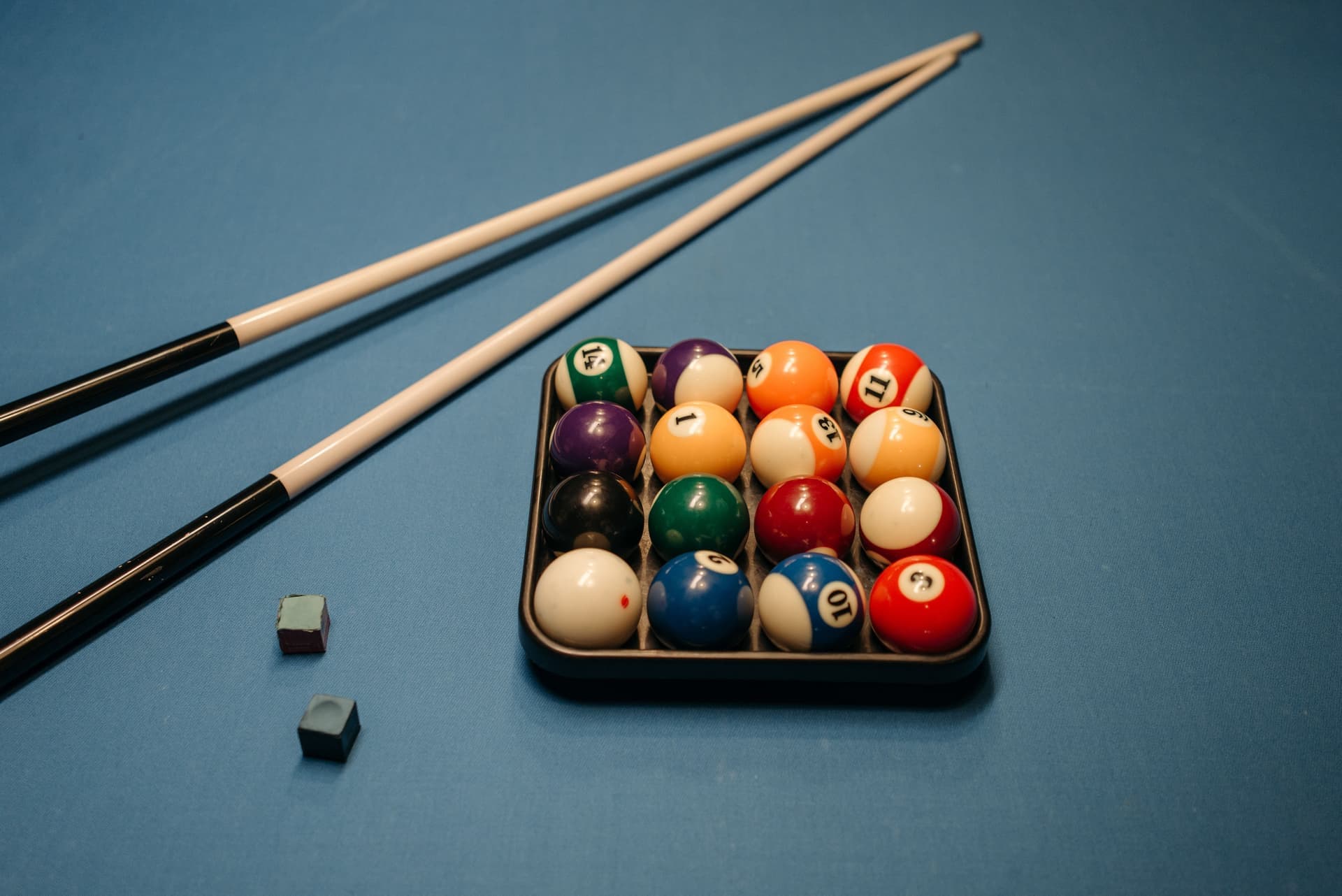
#ad · Buy links are affiliate links and we earn a commission on qualifying purchases. Photographs are licensed images of the category, not of the individual unit — see each retailer listing for the product’s own photography.
1. Best all-round cue
Players C-960 Pool Cue
Players
Players has spent decades building cues in the band where most people actually buy, and the C-960 is a good example of what that money gets: a properly turned maple shaft, a consistent taper, an Irish linen wrap that manages moisture better than a bare handle, and a tip that holds chalk.
That combination is what separates a real cue from a house cue. None of it is exotic and none of it is marketing — a consistent shaft and a decent tip is most of what a cue does, and once you have them the equipment stops being the limiting factor.
If someone in the house plays weekly, this is the tier to buy at. Above it you are refining feel and deflection characteristics; below it you are still fighting the cue.
What we like
- Consistent maple shaft with a well-executed taper
- Irish linen wrap that stays grippy in a warm room
- Quality tip that holds chalk properly
- Long-established cue maker with real support
Worth knowing
- More cue than a strictly casual player needs
- Needs a case and a little care to stay straight
- Tips wear and eventually need replacing
Who it’s wrong for
Somebody who plays twice a year. A house cue set is a better use of the money for occasional play.
#ad · We earn a commission on qualifying purchases. How this is funded
2. Best budget cue
Viper Sinister Two-Piece Pool Cue
Viper (GLD Products)
This is the pick for the situation almost every new table owner is in: the cues in the box are unusable and you do not yet know how much anyone will play. The Sinister is a proper two-piece cue with a real tip and a stable joint, at a price that does not require a decision about anyone's commitment level.
The difference from a bundled house cue is immediate and obvious — mostly straightness and tip quality, which together determine whether the ball goes where you aimed. It is the single best value purchase in this whole hub.
What we like
- Large improvement over bundled cues for little money
- Two-piece with a solid joint
- Wide choice of weights and finishes
- Cheap enough to buy several for guests
Worth knowing
- Not a cue a regular player stays with
- Simpler shaft than mid-range cues
- Finish quality varies between examples
Who it’s wrong for
A serious player. If pool is a real hobby, buy once at the mid tier rather than twice here.
#ad · We earn a commission on qualifying purchases. How this is funded
3. Best for improving players
Cuetec Avid Series Cue
Cuetec
There is a moment in learning pool where you start applying side spin on purpose, and immediately discover that the cue ball does not go where you pointed. That is deflection — the cue ball squirting off line when struck off-center — and low-deflection shafts are engineered to reduce it.
Cuetec's Avid series brings that technology into a mainstream price band. For a player who has moved past straight center-ball shots, it makes the relationship between aim and result far more predictable, which is what actually accelerates improvement.
If the person you are buying for is still learning basics, this is money spent early. If they are starting to talk about english or spin, it is money spent exactly right.
What we like
- Low-deflection shaft makes spin far more predictable
- Well-regarded brand with a strong performance reputation
- Durable construction suitable for regular play
- A genuine performance upgrade, not a cosmetic one
Worth knowing
- Wasted on a player not yet using spin
- More expensive than an entry cue
- Low-deflection shafts feel different — some players prefer traditional
Who it’s wrong for
A complete beginner. They will not perceive the benefit, and a simpler cue at half the price serves them better for the first year.
#ad · We earn a commission on qualifying purchases. How this is funded
4. Best gift cue
McDermott Lucky Series Cue
McDermott
For a gift, there is a real argument for buying a cue from a name the recipient will recognize. McDermott has been making cues in Wisconsin for decades and their Lucky series is the entry point into that lineage — a real McDermott, built to a price.
Practically it sits in similar territory to other mid-tier cues. What it adds is that it is a cue someone is pleased to be given and to be seen with, which for a gift is a legitimate part of the value.
What we like
- Established American cue maker with a strong reputation
- Good build quality for the price
- Presents well as a gift
- Range of finishes and weights
Worth knowing
- Entry tier of the range rather than a flagship
- Paying a little for the name
- Still needs a case for protection
Who it’s wrong for
A player who already owns a good cue. They will have opinions about weight and taper — a gift certificate or a different accessory is safer.
#ad · We earn a commission on qualifying purchases. How this is funded
5. Best house cue set
Aska House Cue Set (4-Pack)
Aska
A table needs house cues as well as good cues. Four matched cues in a rack means guests have something usable, the good cue stays safe, and nobody plays with the warped one nobody wants.
Buy these for what they are: sound, straight, cheap cues for casual use. Pair them with one or two better cues for the people who actually play and the table is properly equipped for a fraction of the cost of four good cues.
What we like
- Four cues for the price of one mid-range one
- Usually offered in a spread of weights
- Perfectly adequate for guests and casual games
- Takes the wear off a better cue
Worth knowing
- Basic tips and finish
- Straightness varies more at this price
- Not for anyone serious
Who it’s wrong for
Someone buying a single cue for themselves. Buy one good cue instead of four cheap ones.
#ad · We earn a commission on qualifying purchases. How this is funded
Specifications
Weight, tip and length — the three specs worth understanding
Weight. Cues are commonly sold from about 18 to 21 ounces. Lighter cues are easier to control for finesse shots, heavier ones deliver more power on the break. Around 19 ounces is the usual middle ground and a sensible default when buying for someone else.
Tip hardness. Soft tips grip the ball more and hold chalk well, which helps with spin, but they mushroom and wear faster. Hard tips last longer and transfer more energy but are less forgiving. Medium is the right answer for almost everyone and is what most cues ship with.
Length. 58 inches is standard. 48-inch and 52-inch short cues exist specifically for tight rooms and are enormously useful if your table sits near a wall — see our small pool table guide for how much clearance they buy back.
Care
Looking after a cue
- Store it flat or hanging, never leaning. A cue left leaning against a wall warps, and a warped cue cannot be fixed.
- Keep it out of the car. Heat and humidity swings are what actually destroy cues, far more than play.
- Chalk before shots that use spin, not compulsively before every shot — the tip only needs it when it is doing work.
- Replace the tip when it goes glassy. A worn tip stops holding chalk and starts miscuing. It is a cheap fix that restores the cue.
Questions
Common questions
What is a good pool cue for a beginner?
How much should you spend on a pool cue?
What weight pool cue should I buy?
Are low-deflection shafts worth it?
Keep reading
Read next