Sizing guide
Dartboard height and throw distance
The numbers are fixed and published. Get them right once and everything you practice transfers everywhere.
By Ryder M. · Last updated September 27, 2026 · How we pick
The direct answer: the center of the bullseye is 5 feet 8 inches (1.73m) from the floor, and the throw line is 7 feet 9¼ inches (2.37m) from the face of the board, measured horizontally. The diagonal from the bullseye to the throw line is 9 feet 7⅜ inches (2.93m), which is the easiest way to check a setup.
Those figures come from the World Darts Federation playing rules and are used by the PDC. They are the same everywhere in the world for steel-tip play, which is what makes getting them right worth the ten minutes it takes.
The numbers
The full figures
| Measurement | Imperial | Metric |
|---|---|---|
| Bullseye height from floor | 5ft 8in | 1.73m |
| Throw distance (steel tip), horizontal | 7ft 9¼in | 2.37m |
| Diagonal, bullseye to throw line | 9ft 7⅜in | 2.93m |
| Throw distance (soft tip), horizontal | About 8ft | About 2.44m |
| Board diameter (standard bristle) | 17¾in | 45.1cm |
| Double and treble ring width | About ⅜in | About 9.5mm |
Steel-tip figures per the World Darts Federation playing rules. Soft-tip distance varies slightly between governing bodies and manufacturers — check the manual for your specific electronic board.
Checking your setup
Why the diagonal is the measurement to use
The horizontal throw distance is measured from the face of the board, not from the wall. On a board mounted flush that is nearly the same thing, but in a cabinet, or on an electronic board that stands proud, it is not — and that is where most home setups go wrong.
The diagonal measurement sidesteps the problem. Run a tape from the center of the bullseye to the back edge of the throw line: 9ft 7⅜in. If that is right, both other measurements are right, regardless of how the board is mounted.
Quick picks
Tap any row to jump to the full write-up.
| # | Product | Best for | Price |
|---|---|---|---|
| 1 | The tool that gets it right Viper Throw Line Marker A proper throw line, so you practice the correct distance every time. | Every home dartboard setup | Check price on Amazon |
| 2 | 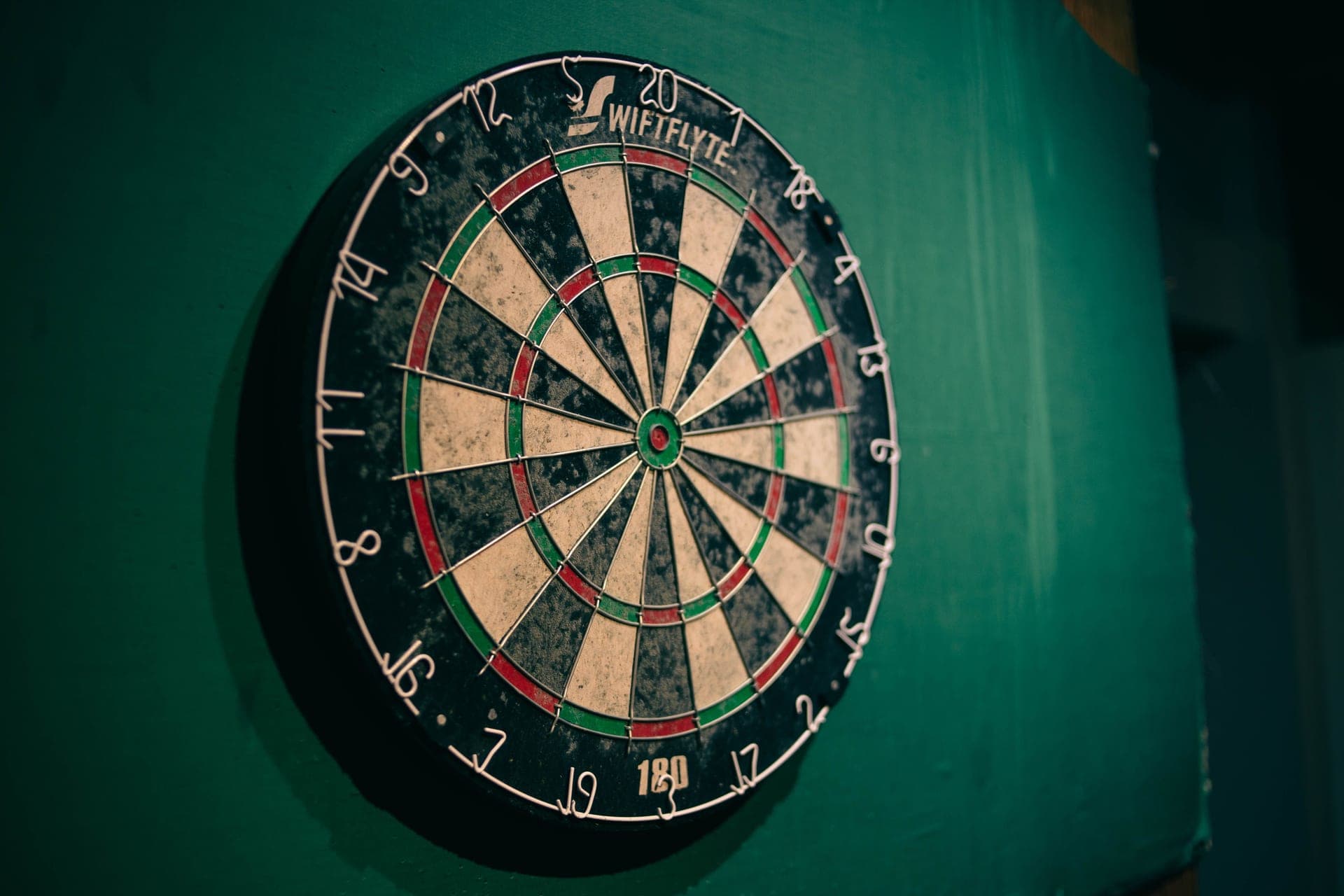 The board to mount Winmau Blade 6 Bristle Dartboard Set the measurements right and this is the board worth setting them for. | Anyone playing steel-tip darts at home | Check price on Amazon |
| 3 | Protect the wall while you measure Viper Defender Dartboard Surround Fit it at the same time as the board, not after the first miss. | Any bristle board on a wall you care about | Check price on Amazon |
#ad · Buy links are affiliate links and we earn a commission on qualifying purchases. Photographs are licensed images of the category, not of the individual unit — see each retailer listing for the product’s own photography.
1. The tool that gets it right
Viper Throw Line Marker
Viper (GLD Products)
The most common home darts mistake is a throw line that is approximate, or absent entirely. A marked oche costs almost nothing and is what makes practice transferable.
What we like
- Marks the correct distance permanently
- Cheap
- Easy to fit
- Gives a consistent foot position
Worth knowing
- Adhesive types can mark floors
- Check it suits your floor type
- One more thing to fit
Who it’s wrong for
Nothing, honestly — every setup benefits.
#ad · We earn a commission on qualifying purchases. How this is funded
2. The board to mount
Winmau Blade 6 Bristle Dartboard
Winmau
A tournament-specification board deserves a tournament-specification setup.
What we like
- Thin wire
- Staple-free bull
- Dense sisal
- Long life
Worth knowing
- Premium price
- Needs wall protection
- No automatic scoring
Who it’s wrong for
A household wanting automatic scoring.
#ad · We earn a commission on qualifying purchases. How this is funded
3. Protect the wall while you measure
Viper Defender Dartboard Surround
Viper (GLD Products)
Beginners miss most, which is exactly when the wall is least protected. Fit it from day one.
What we like
- Cheap
- Fits standard boards
- Protects dart points too
- Easy to remove
Worth knowing
- Does not hide the board
- Foam compresses over time
- Wild throws can clear it
Who it’s wrong for
Someone buying a cabinet instead.
#ad · We earn a commission on qualifying purchases. How this is funded
Step by step
How to set it up
- Mark 5ft 8in on the wall and mount the board so the center of the bullseye — not the top or the bracket — is at that height.
- Check the 20 is at the top. Sounds obvious, gets missed. The board should be oriented with the black 20 segment directly above the bull.
- Measure the throw distance from the board face, horizontally, at floor level: 7ft 9¼in for steel tip.
- Verify with the diagonal — 9ft 7⅜in from the bullseye to the back of the line. If the diagonal is right, the setup is right.
- Mark the line permanently. A proper throw line marker, or tape. An approximate line practiced against for a year teaches an approximate throw.
- Check the board is vertical with a spirit level. A board leaning even slightly changes where darts land relative to where you aim.
Maintenance
Rotating the board
Sisal wears fastest where darts land most, which means the treble twenty takes a disproportionate hammering. Rotating the number ring periodically moves the heavily used segments to fresh sisal and roughly multiplies the useful life of the board.
Most decent boards have a removable number ring designed exactly for this. Move it every month or two if the board gets regular use — it is free, takes a minute, and is the single best thing you can do for a bristle board.
Questions
Common questions
What is the regulation dartboard height?
How far should a dartboard be from the throw line?
How far should a dartboard be off the floor?
Is the dartboard height different for kids?
How do I measure the dartboard throw distance correctly?
Sources
Keep reading
Read next