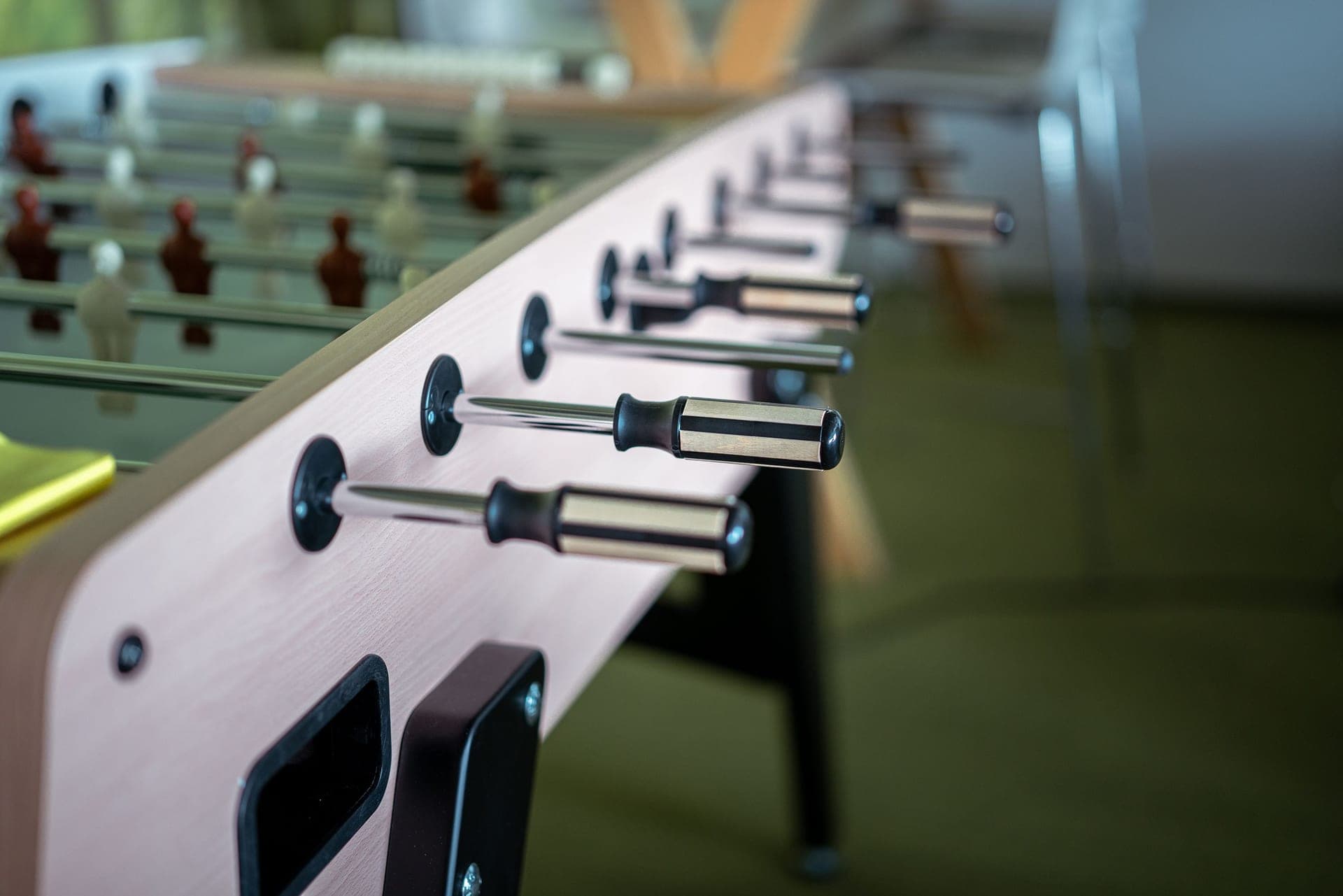
Best foosball table overall
The best foosball tables for home
Our main foosball roundup: six picks from family tables to competition cabinets, with weight used as the honest quality signal.
Category
Small footprint, loud fun, and the fastest game in the room to learn. Also the category where cheap and good look identical in photos.
By Ryder M. · Last updated September 27, 2026 · How we pick
Foosball is the game room's best party trick. A round takes ninety seconds, four people can play at once, and nobody needs to be taught the rules. It also takes up far less room than a pool or ping pong table — a full-size cabinet is a bit over four and a half feet long, and you only need a couple of feet of standing room at each end.
The problem is that foosball is the category where the photographs lie hardest. A $200 table and a $1,200 table look nearly identical in a product shot. The difference is entirely in things a photo cannot show: how much the cabinet flexes when two people lean on it, whether the rods twist under load, whether the legs have levelers, and how much the whole thing weighs. Weight is the single most useful proxy on any listing — a heavy table is a stiff table, and a stiff table is one where the ball goes where you hit it.
The other thing worth knowing before you shop is the rod type. Telescopic rods stop inside the cabinet, so nothing sticks out the far side — safer around small children and better in a tight room. Through rods slide all the way out the other side, which is what competition tables use because it is stronger and smoother, but it means you need clearance on both ends and there is a metal bar at rib height. For a family with young kids, telescopic is usually the right call even though enthusiasts prefer through rods.
If the recipient is a child, or the table is for a playroom, do not assume full size is the goal. Shorter 48-inch tables and tabletop units exist precisely because a full-size cabinet is too tall for a seven-year-old to reach comfortably. We cover the trade in full-size vs tabletop and pick specifically for younger players in best foosball tables for kids.
Start here
Every guide below is written for someone buying rather than someone who already plays.
Cue & Paddle is reader-funded. If you buy through a link on this page we may earn a commission, at no extra cost to you. It never changes which products we pick or how we rank them — read the full disclosure.
Best foosball table overall
Our main foosball roundup: six picks from family tables to competition cabinets, with weight used as the honest quality signal.
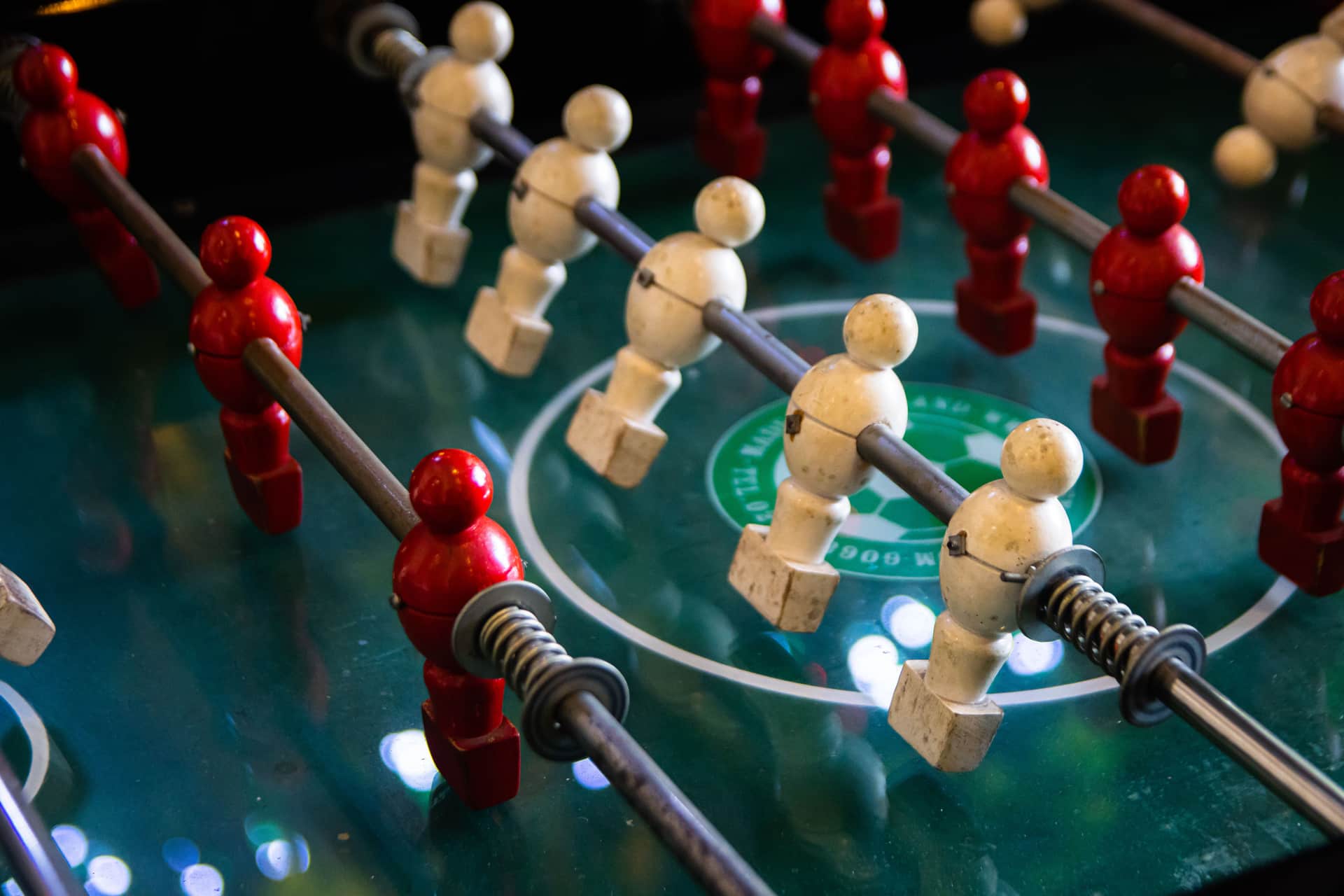
Best foosball table under $300
What under $300 buys in foosball, which compromises are survivable, and the picks worth having.

Best foosball table for kids
Height and reach by age, why telescopic rods matter with children, and tables kids can genuinely play on.
How to choose
Foosball rewards a slightly different checklist than the other tables in this room, because the failure mode is different — a bad foosball table does not wear out, it feels wrong on day one.
Two things you can safely ignore in the marketing: the number of balls included, and the scoring beads. Both cost pennies and neither tells you anything about the table. And if you are wondering whether the whole category is worth it for your household at all, we answer that honestly — including when it is not — in are foosball tables worth it.
Before you buy
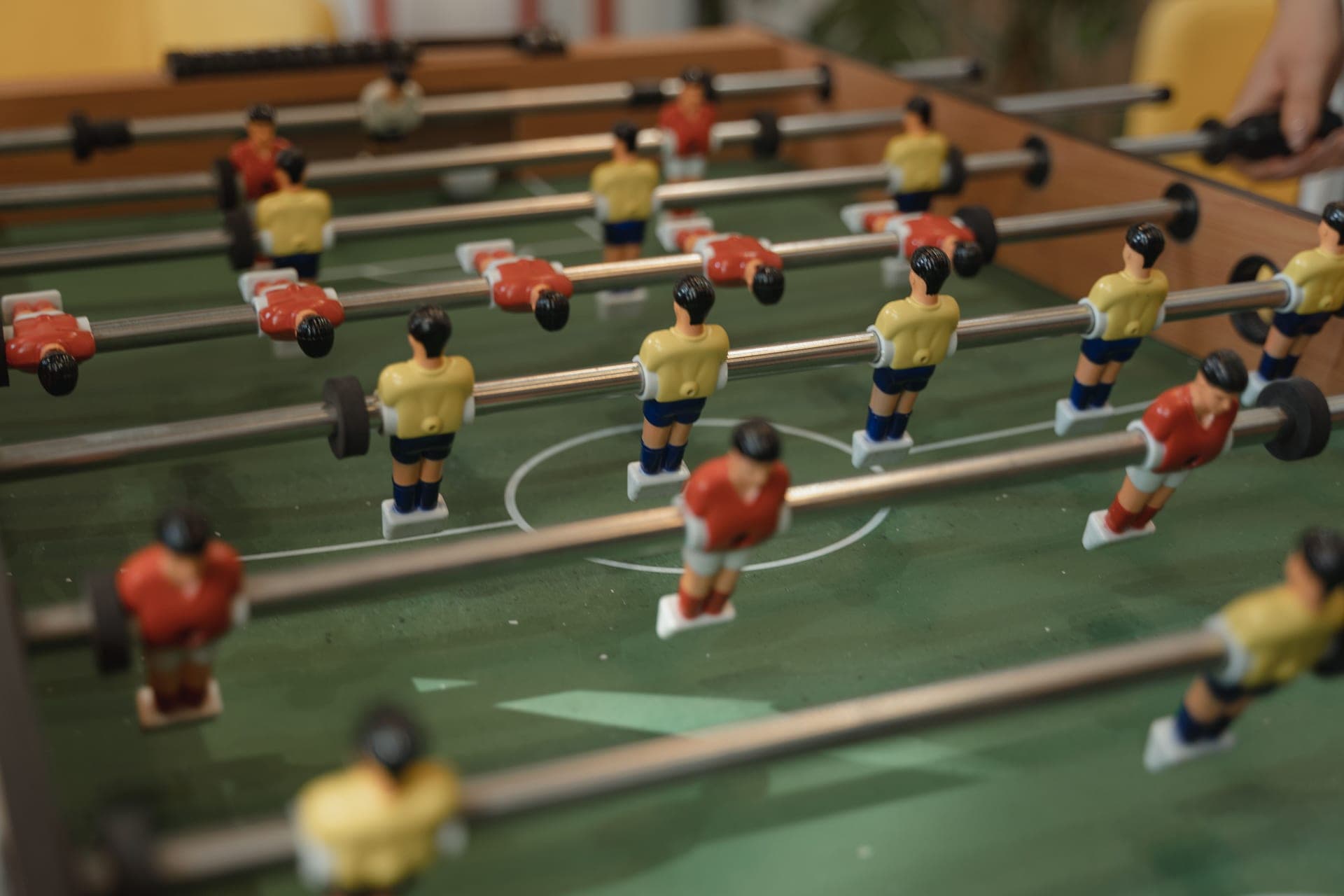
Comparison
What tabletop foosball is genuinely for, where it falls short, and how to choose between the two formats.
Guide
Cabinet and playing field dimensions, plus the room clearance you need — including rod travel on through-rod tables.
Guide
The honest case for and against, who gets the most out of a foosball table, and when another table is the better buy.
Guide
The market in bands, what each step up genuinely buys, and why weight is the most honest number on the listing.
Questions
Elsewhere on Cue & Paddle
Blower strength, sizes by age, and the difference between an arcade-grade table and a toy. Picks for kids and adults.
Where combo tables genuinely make sense, where they do not, and the dining tables that hide a pool table underneath.
Buying this for someone else? Start with the gift guide instead.