Roundup
The best ping pong tables for kids
A full-size table is 30 inches tall, which is chest height on a seven-year-old. Here is what to buy instead, by age.
By Ryder M. · Last updated October 4, 2026 · How we pick
Cue & Paddle is reader-funded. If you buy through a link on this page we may earn a commission, at no extra cost to you. It never changes which products we pick or how we rank them — read the full disclosure.
The short answer: for children under about eight, buy a midsize or 5ft table — a regulation table stands 30 inches tall, which is roughly chest height on a seven-year-old and makes a rally close to impossible. From about ten, buy full size and let them grow into it. Between eight and ten it depends on the child's height more than their age, so measure rather than guess.
That is the whole decision, and it is almost always made backwards. Parents compare top thickness and brand when the specification that determines whether the table gets used is how far the child has to reach up to see the surface.
The sizing
Table size by age
| Age | Table size | Height | Why |
|---|---|---|---|
| 3-5 | Tabletop set on a dining table | Whatever it sits on | Hand-eye coordination, not a court |
| 5-8 | 5ft table | About 22-24in | Short court keeps the ball within reach |
| 6-12 | Midsize / three-quarter | About 26-28in | The practical sweet spot for a child's table |
| 10+ | Full size (9ft x 5ft) | 30in regulation | Most children manage regulation height by now |
| Mixed ages | Full size | 30in regulation | One table that everybody can use, with a lowered net for the youngest |
Heights vary a little between manufacturers. If a child is close to the boundary, stand them next to a regulation table in a shop — the elbow should clear the surface comfortably.
If you already own a full-size table and a young child cannot play on it, there is a cheap intermediate step: lower the net, use a slower training ball, and play a shortened game with one bounce allowed on each side. It does not fix the height but it makes the rally possible, which is most of the problem.
Quick picks
Tap any row to jump to the full write-up.
| # | Product | Best for | Price |
|---|---|---|---|
| 1 | Best overall for children JOOLA Midsize Compact Table Tennis Table A three-quarter-size table at a height a child can actually play over. | Children roughly 6 to 12 | Check price on Amazon |
| 2 | Best small table Harvil 5 ft Table Tennis Table Five feet of table that fits a bedroom or a playroom corner. | Small rooms and children under about 8 | Check price on Amazon |
| 3 | 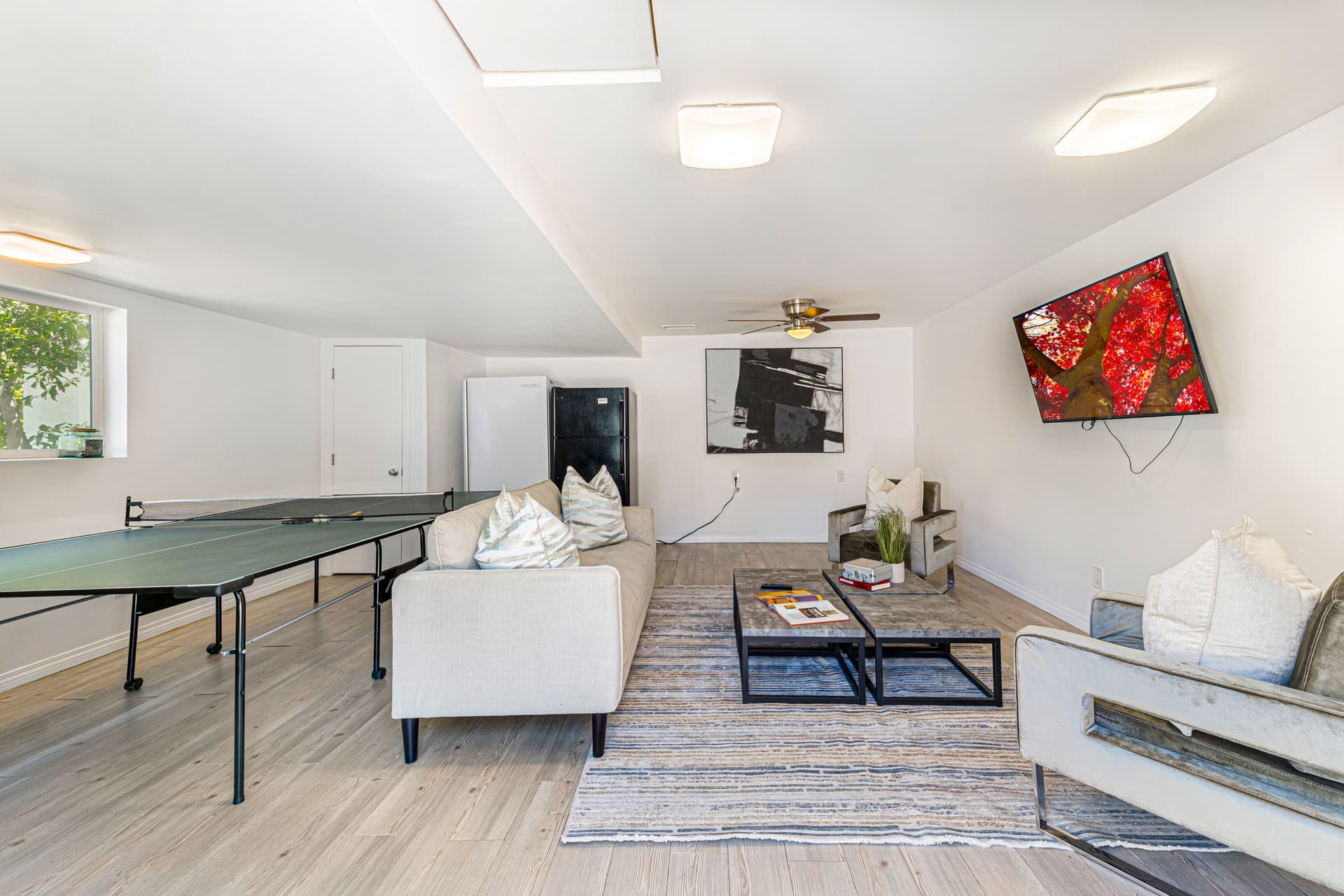 Best to grow into STIGA Advantage Table Tennis Table A full-size table solid enough to last from childhood into adult play. | Families with mixed ages, or a child over about 10 | Check price on Amazon |
| 4 | Best budget full size MD Sports 4-Piece Table Tennis Table Full size at the lowest sensible price, in four pieces that one person can carry. | Garages, basements and tight budgets | Check price on Amazon |
| 5 | 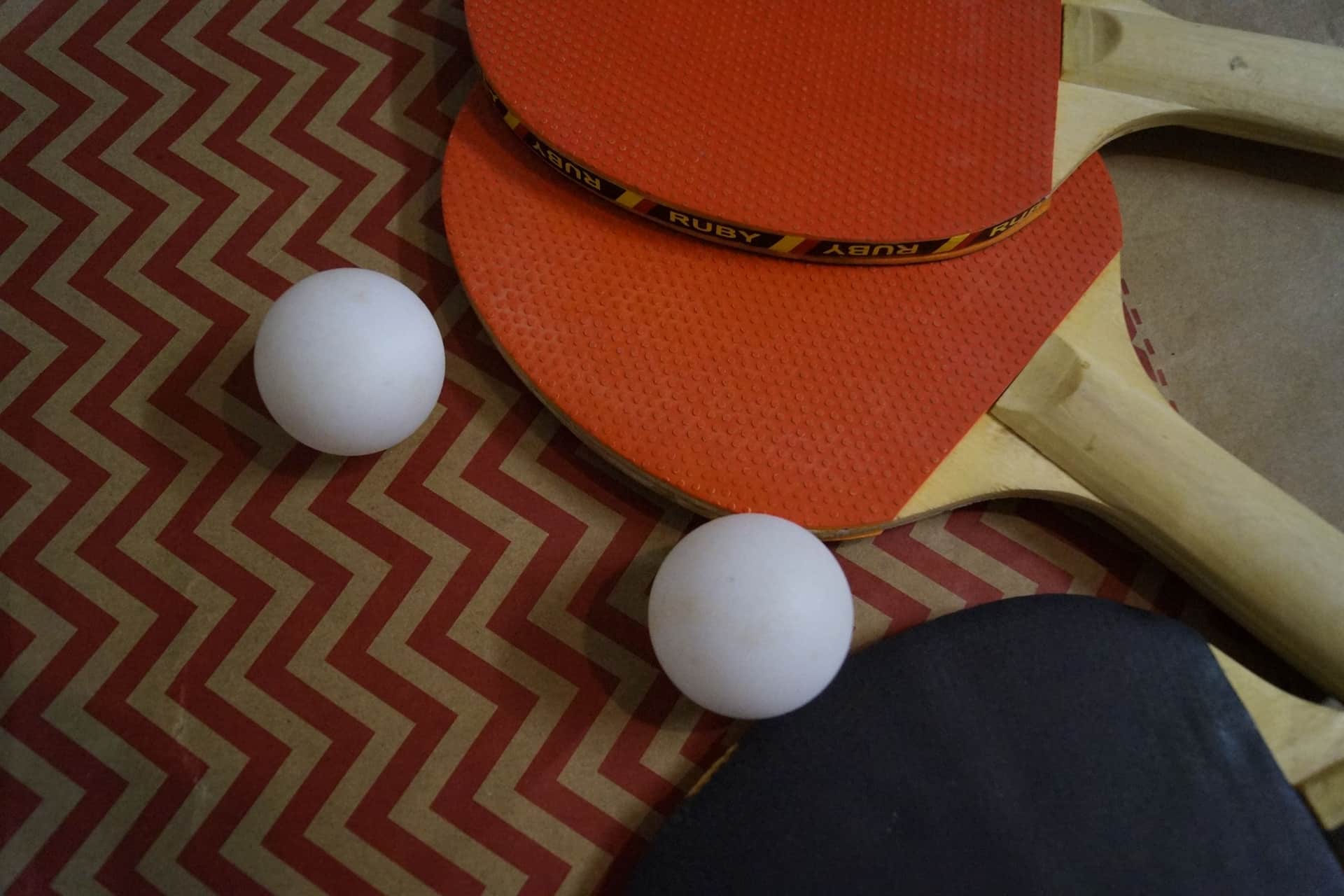 Best paddles for children PRO-SPIN Elite Ping Pong Paddle Set A four-paddle set with balls, so the whole family can play on day one. | Any new table in a house with children | Check price on Amazon |
#ad · Buy links are affiliate links and we earn a commission on qualifying purchases. Photographs are licensed images of the category, not of the individual unit — see each retailer listing for the product’s own photography.
1. Best overall for children
JOOLA Midsize Compact Table Tennis Table
JOOLA
The specification that decides whether a child enjoys table tennis is height, not quality. A regulation table stands 30 inches tall, and a seven-year-old standing at one is looking across the net rather than down at the surface. They cannot see the ball land, they cannot reach a short ball, and they stop playing within two weeks.
A midsize table solves it by lowering the surface and shortening the court. The rally becomes possible, which is the only thing that matters at that age — a child who can keep a ball on the table will play for an hour, and a child who cannot will not play twice.
It also folds and rolls, which matters in a family house where the table is in a room that has another job. The compromise is honest: adults will find it small, and a teenager will outgrow it. For the years it suits, nothing else does the job as well.
What we like
- Lower surface and shorter court — children can see and reach the ball
- Folds and rolls away for storage
- Arrives essentially assembled
- Net and posts sized to the table rather than an afterthought
Worth knowing
- Adults find the court short
- A teenager will outgrow it within a few years
- Thinner top than a full-size table, so the bounce is lower
Who it’s wrong for
A household where adults are the main players. Buy full size and let the children grow into it — see best ping pong tables.
#ad · We earn a commission on qualifying purchases. How this is funded
2. Best small table
Harvil 5 ft Table Tennis Table
Harvil
A 5ft table is half the length of a regulation one. That sounds like a toy and it is not — it is a short court with a real net, a real bounce and real rallies, and for a young child a short court is an advantage rather than a limitation because the ball comes back within reach.
The reason to buy this over a midsize table is space. It fits where nothing else will: a bedroom, a playroom corner, a landing. If the alternative is no table because the room is too small, this is the table.
Expect it to be a stage rather than a purchase for life. Children move on from a 5ft court faster than from a midsize one, and the resale value on small tables is modest but real because they are light enough to collect in a car.
What we like
- Fits rooms that cannot take any larger table
- Short court keeps the ball within a small child's reach
- Light enough for one adult to move
- Low enough for children under 8 to play over comfortably
Worth knowing
- Outgrown quickly
- Too small for adults to use at all
- Light frame — it moves if leaned on
Who it’s wrong for
Anyone over about ten years old. The court is genuinely too short.
#ad · We earn a commission on qualifying purchases. How this is funded
3. Best to grow into
STIGA Advantage Table Tennis Table
STIGA
There is a strong argument for skipping the children's table entirely. A full-size table that a child grows into is one purchase instead of two, it stays useful for twenty years, and from about age ten most children manage regulation height without difficulty.
What makes this the right full-size table for a family rather than a cheaper one is the undercarriage. Children lean on tables, sit on them, and fold them without being asked. A table with a proper frame and locking wheels survives that; a thin-framed one develops a wobble and then a sag in the middle of the top.
If the children are under about eight, buy the lower table and accept that you will buy a second one later. Between eight and ten it is a genuine judgement call about the individual child's height.
What we like
- Regulation size and height — nobody outgrows it
- Frame and wheels that survive being leaned on and folded
- One purchase instead of two
- Holds its value far better than a children's table
Worth knowing
- Too tall for children under about eight to enjoy
- Needs a full-size room — about 19ft by 11ft for comfortable play
- Heavier to move than a midsize table
Who it’s wrong for
A child under eight as the main player. Check the clearances in our room size guide before committing to full size.
#ad · We earn a commission on qualifying purchases. How this is funded
4. Best budget full size
MD Sports 4-Piece Table Tennis Table
MD Sports
A four-piece top is a different proposition from a rollaway. It separates into sections that one adult can carry and stand against a wall, which makes it the practical answer for a garage or a basement where the table has to disappear sometimes.
The trade is bounce consistency. Four separate panels do not form quite as even a surface as a two-halves rollaway, and the seams are findable if you look for them. For family play nobody notices; for a child learning, it is irrelevant.
It is also the cheapest honest route to a full-size table, which matters if the real question is whether the household will use one at all.
What we like
- Full regulation footprint at the bottom of the price range
- Four pieces — one adult can move and store it
- Takes garage and basement conditions well enough
- Cheap enough to be a low-risk experiment
Worth knowing
- Seams between panels mean a slightly less even bounce
- Thin top, so the bounce is lower than a premium table
- Assembly and net quality are basic
Who it’s wrong for
A player who wants a consistent competitive bounce. Buy a thicker rollaway top instead.
#ad · We earn a commission on qualifying purchases. How this is funded
5. Best paddles for children
PRO-SPIN Elite Ping Pong Paddle Set
PRO-SPIN
The paddles bundled with a table are the same story as the cues bundled with a pool table: they are the cheapest component in the box. Thin sponge, hard handles, rubber that has no grip on the ball. A child trying to learn with one is fighting the equipment.
A four-paddle set is the right shape of purchase for a family. Everybody has one, nobody is sharing, and the paddles are light enough for a child to hold at the end of a long rally rather than halfway through one.
They are not competition paddles and should not be. A child needs a light paddle with enough grip to put the ball back on the table, and that is exactly what this is.
What we like
- Four paddles plus balls — enough for doubles immediately
- Light enough for children to hold through a long rally
- Real rubber with grip, unlike bundled paddles
- Comes in a case, so nothing gets lost behind the table
Worth knowing
- Not competition-grade rubber
- Handles are one size — large adult hands find them small
- Rubber loses grip after a year or two of heavy play
Who it’s wrong for
A developing player who has started playing in a club. They need a single better paddle — see best ping pong paddles.
#ad · We earn a commission on qualifying purchases. How this is funded
The criteria
What to look for on a children's table
- Height before anything else. It decides whether the table gets used. Everything else is refinement.
- A locking fold mechanism. Children fold tables. A mechanism that locks in both positions is a safety feature, not a convenience.
- Rounded corners and edges. At a child's eye level, a table corner is at face height. It is worth checking.
- Locking wheels. A table that rolls while being leaned on is how a child ends up underneath it.
- A net that adjusts. A lower net makes early rallies possible and costs nothing.
- Top thickness last. On a children's table, 12-15mm is normal and fine. Thickness matters for competitive bounce, which is not what is happening here — the detail is in 15mm vs 25mm.
Space
Where to put it
A full-size table needs roughly 19ft by 11ft for comfortable play, and that is more room than most families have. A midsize table needs considerably less, and a 5ft table will fit in a bedroom. This is often the real reason a children's table is the right answer — not the child's height, but the room.
If space is the binding constraint rather than age, our small space roundup covers the compact options for adults too, and a conversion top over an existing table is worth considering if you already own a pool or dining table of the right size.
Durability
Keeping a children's table alive
- Fold it when nobody is playing. A folded table cannot be sat on, and sitting on the top is what causes the sag in the middle.
- Keep it out of a damp garage. Children's tables have thinner tops, and a thin top swells faster than a thick one.
- Replace the net early. A sagging net makes the game worse and costs very little to fix.
- Keep a tube of spare balls. Running out of balls is the most common reason a table stops being used, and it is entirely preventable.
- Check the leg bolts every few months. They work loose under the kind of play children provide.
Questions
Common questions
What size ping pong table is best for kids?
What age can a child use a full-size ping pong table?
Should I buy a kids' ping pong table or a full-size one?
Are cheap ping pong tables OK for children?
What paddles should kids use?
Keep reading
Read next