Guide
How to move a ping pong table
A rollaway table is designed to be moved, which makes people casual about it. The damage happens in the three places the castors cannot help you: thresholds, stairs and the back of a truck.
By Ryder M. · Last updated October 23, 2026 · How we pick
The short answer: fold the table, engage the locking catch, take the net off, and wheel it on its castors — never carry it by the playing top. Lift the leading edge over every threshold rather than dragging the castors across, because a bent castor stem is the most common damage on a moved table. On stairs use three people: two for the weight and one controlling the far end on the turn. In a truck, lay it flat on its back or strap it upright against a wall, edges protected, and never let it travel on its castors.
A full-size indoor table weighs roughly 150 to 250 lb assembled, so this is a job where the weight is manageable and the awkwardness is not. The table is large, flat, has no good handholds, and its most fragile part is the big flat surface everyone instinctively grabs. Almost all the damage from moving a ping pong table is cosmetic-looking and permanent: a chipped top edge, a bent castor, a folding mechanism that no longer locks square.
Five minutes that save the table
Before you touch it
- Take the net and posts off. They are the part that catches a doorframe, and they are cheap to break and annoying to replace. Put them in a bag, not loose on the floor.
- Clear the route completely. Doors wedged open, rugs rolled back, nothing on the floor. You cannot put a folded table down gently halfway through to move a shoe.
- Measure the narrowest point of the route, including the handrail on a stair. A folded full-size table is roughly 5 to 6 ft tall, about 5 ft wide and a foot or so deep.
- Check the castor locks. Most rollaways have brakes on two castors. Know which, and know they are off before you push.
- Find the folding catch and read it. Every rollaway has a locking pin or lever that holds the halves folded. A table that opens on a stair is how both tables and people get hurt.
- Decide who is where before you lift, and agree that whoever is walking backwards calls the stops.
The part people rush
Folding it correctly
Rollaway tables fold in one of two ways and the difference matters. Most fold as two independent halves, each on its own castor set — those separate completely and are moved one half at a time, which is far easier and is the whole reason the format exists. Some fold as a single unit, where both halves come up to meet in the middle on a shared undercarriage.
On a two-half table, move the halves separately. People routinely wheel them side by side as if the table were still one object, which puts the two halves' edges against each other and chips both. On a single-unit table, make sure the locking catch is fully engaged and give the folded assembly a gentle push-pull before you commit — if it has any play in it, it is not locked.
Quick picks
Tap any row to jump to the full write-up.
| # | Product | Best for | Price |
|---|---|---|---|
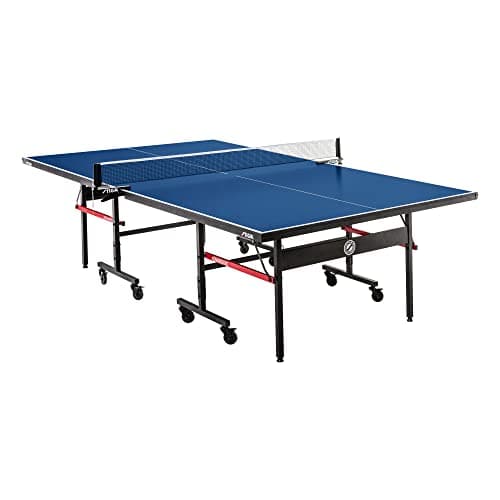
| 1 | 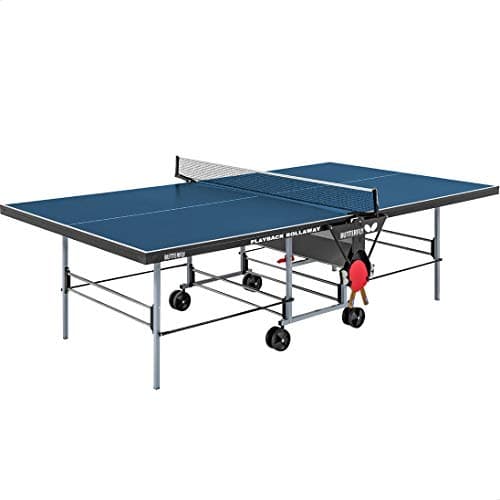 Easiest full-size table to move Butterfly Playback 19 Rollaway Table Tennis Table Around 157 lb and a playback fold — one person can reposition it on a flat floor. | Rooms the table has to leave regularly | $999.69View on Amazon |
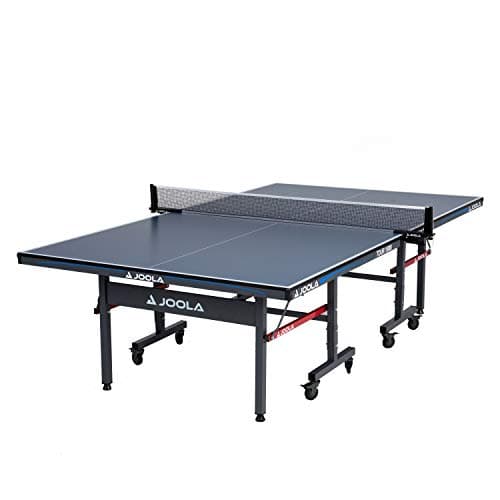
| 2 | 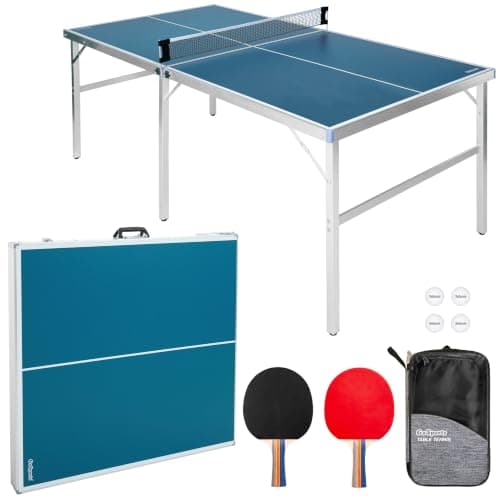 Lightest option if the route is the problem GoSports 6 ft Mid-Size Table Tennis Table A mid-size table one adult can lift, for houses the full-size box cannot enter. | Tight stairs, narrow landings and apartments | $159.99View on Amazon |
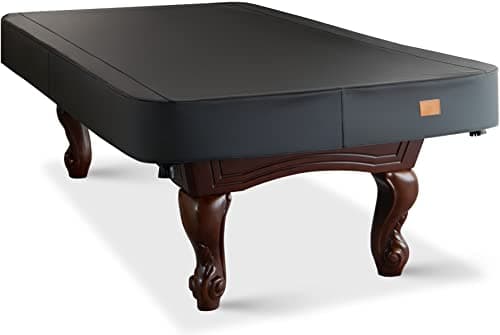
| 3 | 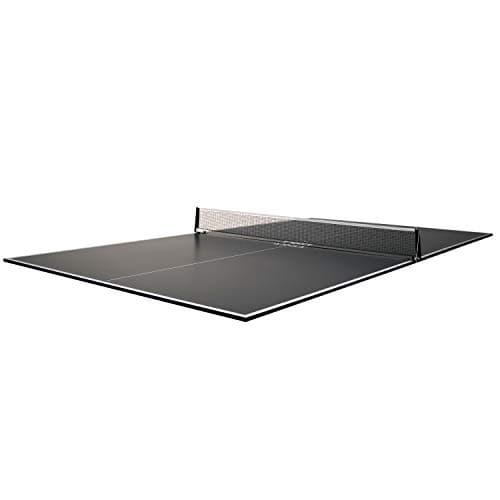 Best alternative to moving a table at all JOOLA Regulation Table Tennis Conversion Top A regulation conversion top that stores flat and needs no castors. | Households that already own a pool or dining table | $249.95View on Amazon |
#ad · Buy links are affiliate links and we earn a commission on qualifying purchases. Prices and product photographs come from the Amazon listing itself and are refreshed daily; the date they were last checked is shown under each buy button. Where a maker does not sell through Amazon there is no product photo, and the card below says so.
1. Easiest full-size table to move
Butterfly Playback 19 Rollaway Table Tennis Table
Butterfly
If you are reading this because moving your table is a recurring job rather than a one-off, the table itself is the problem worth fixing. At roughly 157 lb assembled the Playback 19 is at the light end of full-size rollaways, and that figure is the difference between a table that gets folded and wheeled aside each week and one that stays where it was first put.
The weight comes out of the frame rather than the top, so the 19 mm playing surface and the bounce it gives are unchanged. What you trade is a little frame rigidity, which a strong player notices as slight movement when leaning on the table.
Folded upright it occupies a fraction of its playing footprint, which is the other half of being movable — a table you can fold but cannot store anywhere has not solved your problem.
What we like
- Around 157 lb assembled — the light end of full-size rollaways
- One person can fold and wheel it across a flat floor
- Standard 19 mm top, so portability costs nothing in bounce
- Stores upright against a wall
Worth knowing
- Lighter frame moves slightly under a leaning player
- Still 157 lb — not a one-person job on stairs
- Castors want a reasonably flat floor
Who it’s wrong for
A dedicated game room where the table never moves. Heavier tables are steadier and usually cheaper.
#ad · We earn a commission on qualifying purchases. How this is funded · Price as of November 9, 2026
2. Lightest option if the route is the problem
GoSports 6 ft Mid-Size Table Tennis Table
GoSports
Sometimes the honest answer to a moving problem is a smaller table. A mid-size table weighs well under 100 lb, which means one adult can lift it rather than manoeuvre it, and it goes up a turning stair that defeats a full-size box completely.
The cost is timing: a shorter table means the ball arrives sooner than it would in a real rally, so strokes learned on one need adjusting on a regulation table. For casual and family play that does not matter much.
It is also the only format that fits a room which cannot clear the full playing space, which is a separate constraint from the move itself and frequently the real one.
What we like
- Light enough for one adult to lift and carry
- Fits up stairs and through doorways a full-size box will not
- Stores in a cupboard or behind furniture
- Cheapest way into the game
Worth knowing
- Shorter than regulation — teaches slightly different timing
- Lighter frame flexes more under play
- A keen player will outgrow it
Who it’s wrong for
Anyone learning the real game. The geometry is what you are giving up, not just the size.
#ad · We earn a commission on qualifying purchases. How this is funded · Price as of November 9, 2026
3. Best alternative to moving a table at all
JOOLA Regulation Table Tennis Conversion Top
JOOLA
If the table has to be moved because the room has another job, a conversion top sidesteps the whole problem. It sits on a pool table or a sturdy dining table, gives you a regulation playing surface, and comes off in two or four pieces that one person handles.
The catch is storage, and it is a real one: a conversion top must be stored flat. Leaning it against a wall on edge for a year puts a bow in it that cannot be taken out, which is the single most common way these get ruined.
For a room where a full table genuinely does not fit, this is the format that gets played rather than resented.
What we like
- Regulation playing dimensions on an existing table
- Pieces are light enough for one person
- No castors, no folding mechanism, nothing to bend
- Takes no floor space when stored
Worth knowing
- Must be stored flat or it bows permanently
- Needs a solid table underneath, properly sized
- Setup and takedown every session
Who it’s wrong for
A household with no suitable table to put it on. See conversion tops for the sizing rules.
#ad · We earn a commission on qualifying purchases. How this is funded · Price as of November 9, 2026
The easy part, done wrong
Wheeling it across a floor
- Push from the frame at waist height. Pushing high on the folded top makes the table want to tip; pushing at the frame keeps the weight over the castors.
- Lift the leading edge over every threshold. Door sills, carpet-to-tile transitions, a lip onto a patio. Dragging a loaded castor over a lip bends the stem, and a bent stem means a table that no longer rolls straight or folds square.
- Keep it square to the direction of travel. Castors on these tables are small and most are not fully swivelling under load. Trying to crab a folded table sideways is what snaps the mountings.
- Slow down on carpet. Thick carpet stops a small castor dead, and the table keeps going. Two people, one each side of the frame, walking it rather than rolling it.
- Watch the ceiling, not just the floor. A folded table is often taller than a doorway and taller than a light fitting. Light fixtures are the thing people genuinely forget.
- On a two-half table, do one half at a time. Half the weight, half the height, and nothing to chip against.
Three people, no exceptions
Stairs
Stairs are where the weight stops being the issue and the geometry starts. A folded table is tall, so the top end swings a long way for a small movement at the bottom end — which is exactly the wrong characteristic on a staircase with a turn in it.
- Three people minimum. Two carry, one stays at the high end purely to control the swing and call the turn. That third person is not optional on a turning stair.
- Confirm the catch is locked, then confirm it again. A half opening on a stair is the accident this whole page exists to prevent.
- Take it on its back, not on its edge where the staircase allows it. The back of the frame is the strongest face and the one with no laminate to chip.
- Measure the diagonal across any landing before you start. It is the figure that decides whether the table makes the turn, and it is not the width of either flight.
- Carry from the frame, with the heaviest person at the low end. The low end carries most of the weight on a stair.
- Rest on the landing if you need to. Put it down on the frame edge, never on the top edge, and never lean it on the castors.
- On a two-half table, carry one half. This turns a difficult three-person job into a straightforward two-person one, and it is the single best reason to own a two-half rollaway.
If the stair has a tight turn and the table is a single-unit fold, be honest about whether it will physically go. A table wedged on a landing is a worse outcome than a table that stays in the basement, and the figures you need to compare are in how heavy is a ping pong table.
Trucks, vans and roof racks
Transporting it in a vehicle
A folded full-size table does not fit in a car and does not fit in most SUVs. The realistic options are a pickup bed, a cargo van or a small box truck, and the rules are the same for all three.
| Vehicle | Works? | What to watch |
|---|---|---|
| Pickup truck, short bed | With the tailgate down | Table overhangs — strap to the bed rails and flag the overhang |
| Pickup truck, long bed | Yes | Lay it on its back on blankets; strap over the frame, not the top |
| Cargo van | Yes, best option | Strap upright against a side wall, frame against the wall |
| Box truck | Yes | Use the load bar; do not let it lean on a stack of boxes |
| SUV with seats down | Rarely | Measure first; a 5-6 ft folded height needs real length |
| Car roof rack | No | Large flat panel, high wind load. Do not |
| Open trailer | Yes, if covered | Rain on an engineered-wood top swells the edges permanently |
A two-half table splits into two shorter, lighter loads, which makes a pickup bed far more workable than it is for a single-unit fold.
- Blankets on the edges first. The top edges are the fragile part and the part that touches the vehicle.
- Strap over the frame or undercarriage. A ratchet strap tightened across the playing top will dent it.
- Flat on its back, or upright against a wall. Never flat on its face, and never resting on the castors — the stems are not designed to take the weight through a bump.
- Keep it dry. The top is engineered wood. Water finds the edges and swells them, and a swollen edge is permanent.
- Do not stack anything on it. A flat table in a truck bed looks like a shelf and is not one.
- Drive as if it is unsecured, however well you strapped it. Most in-transit damage happens on one hard stop.
Afterwards
Setting it back up
Unfold on the floor it is going to live on, not in the doorway. Open it slowly — the halves are heavy and the hinge takes the load — and check that both halves sit level with each other across the join. A step at the join is the usual sign that a folding mechanism was stressed during the move, and on most tables the undercarriage has adjusters that take it out.
Then check the legs. Most rollaways have levelling feet, and a table that was fine in its old room will almost always need a turn or two in the new one, because floors are not flat and no two rooms are flat the same way. Roll a ball slowly along each line: if it drifts, adjust the low side. The full setup sequence, including net height, is in how to set up a ping pong table.
Finally, confirm the room actually works before you put the net on. The table is 9 ft by 5 ft and the space you need is far larger — about 19 ft by 11 ft for comfortable play. If the new room is tighter than the old one, room size guide has the usable minimums.
Damage
What goes wrong, and whether it is fixable
Chipped top edge — not fixable. The laminate is thinnest at the edge and a chip changes the bounce near the line. This comes from carrying by the top, from two halves knocking together, and from strapping over the surface.
Bent castor stem — sometimes fixable, usually replace. From dragging over a threshold or crabbing the table sideways. Castors are available as spares from the established brands, which is a quiet argument for buying a brand over a big-box table.
Folding catch no longer locks square — repairable, worth doing immediately. Usually a bolt that has worked loose in the undercarriage rather than a broken part. Leaving it means the table may unfold while being moved.
Swollen edge from damp — not fixable. Engineered wood plus water. This one comes almost entirely from uncovered trailers and from a table stored in a garage after the move rather than from the move itself.
A step at the join — fixable. Adjust the undercarriage or the levelling feet, then re-check with a slow roll along each line.
Questions
Common questions
How do you move a ping pong table?
Can one person move a ping pong table?
How do you move a ping pong table upstairs?
Will a ping pong table fit in a pickup truck?
What is the most common damage when moving a ping pong table?
Do I need to re-level a ping pong table after moving it?
Keep reading
Read next