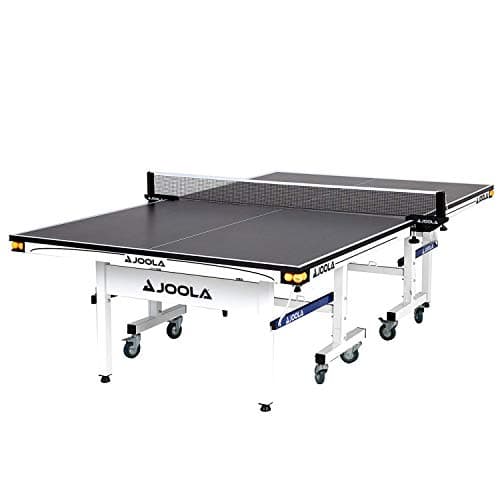
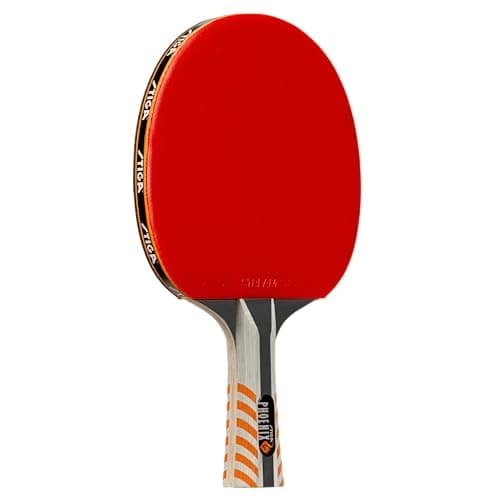
Comparison
Ping pong vs table tennis
Same table, same ball, same game. The two names exist because of a trademark dispute that is older than the Olympics the sport now appears in.
By Ryder M. · Last updated October 17, 2026 · How we pick
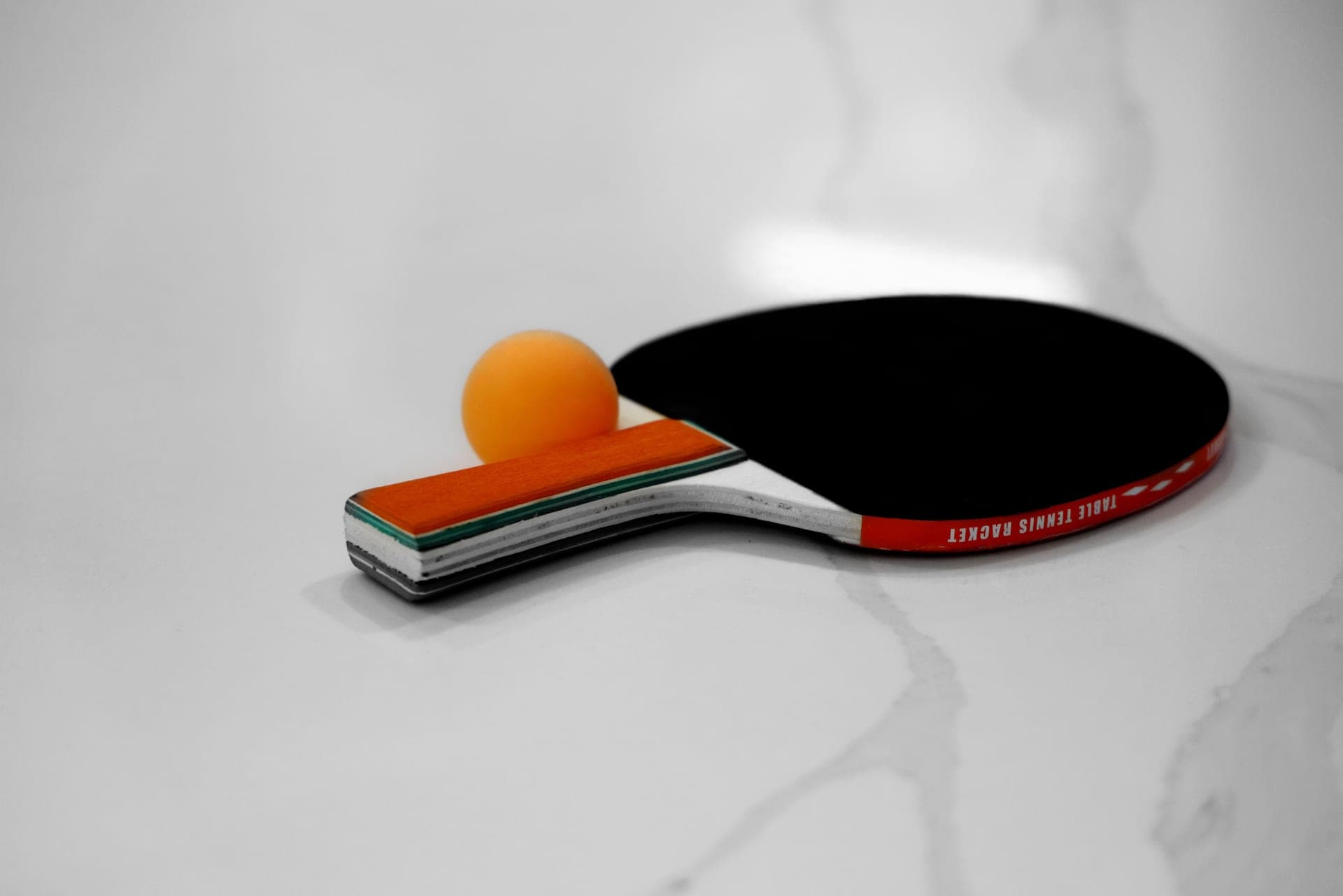
The short answer: there is no difference. Ping pong and table tennis are two names for the same sport, played on the same table with the same ball under the same rules. The two names exist because the British firm J. Jaques & Son trademarked "Ping-Pong" in 1901 and sold the US rights to Parker Brothers, who enforced the trademark in the 1920s — which forced the sport's own associations to call themselves table tennis instead.
That is the whole story, and it explains every pattern in how the two words are used today. "Table tennis" is the formal, institutional name because the institutions were legally obliged to adopt it. "Ping pong" survived as the everyday word because it is more fun to say and because the trademark never stopped ordinary people using it.
History
Where the two names came from
The game was being sold as a parlour amusement in late-Victorian Britain under several names. Jaques of London marketed a version called Gossima in the early 1890s, then rebranded it in 1901 as Ping-Pong — a name taken from the sound of the ball on the bat and the table — and trademarked it. Other manufacturers, unable to use the trademarked name, sold the same game as table tennis.
Jaques sold the American rights to Parker Brothers, who enforced the trademark in the 1920s. That enforcement is why the governing bodies are named as they are: the International Table Tennis Federation was formed in 1926, under the name it could legally use. The sport entered the Olympic programme in 1988 as table tennis for the same reason.
So the split is not sporting, it is commercial. One name belonged to a company; the other was free.
The comparison
Ping pong vs table tennis, side by side
| Ping pong | Table tennis | |
|---|---|---|
| What it is | The same sport | The same sport |
| Origin of the name | Jaques trademark, 1901 | The generic name used by other makers |
| Governing body | ITTF (there is no separate body) | ITTF, formed 1926 |
| Table | 2.74 m x 1.525 m, 76 cm high | Identical |
| Ball | 40 mm plastic, three-star for competition | Identical |
| Scoring | 11 points, serve changes every 2 | Identical |
| Olympic status | Appears as table tennis | Olympic sport since 1988 |
| Usual usage | Casual, social, basements and offices | Clubs, coaching, competition |
| What it signals | You are here to have fun | You are here to train |
The last two rows are the only genuine differences, and they are about register rather than rules. Nobody is playing a different game.
Quick picks
Tap any row to jump to the full write-up.
| # | Product | Best for | Price |
|---|---|---|---|
| 1 | 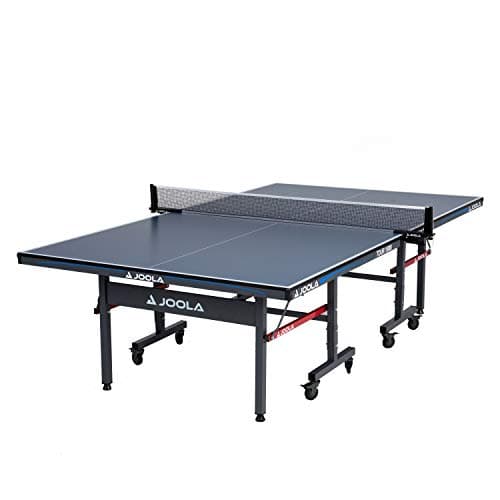 Best regulation table JOOLA Tour 1800 Table Tennis Table Full ITTF playing dimensions in a rollaway that fits a house. | Anyone who wants the real thing at home | $599.95View on Amazon |
| 2 | 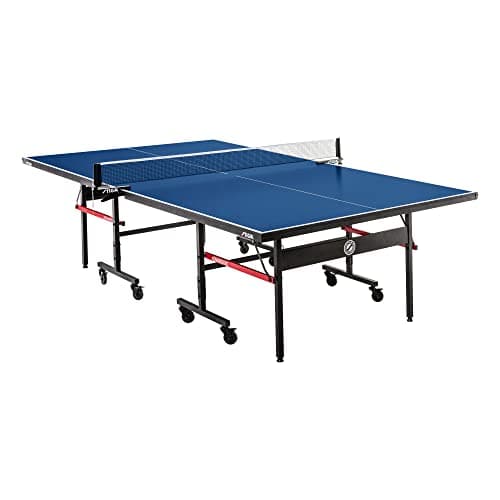 Best value full-size table STIGA Advantage Table Tennis Table Regulation dimensions at a family price, assembled in under an hour. | A first full-size table for a household | $455.90$599.9924% offView on Amazon |
| 3 | 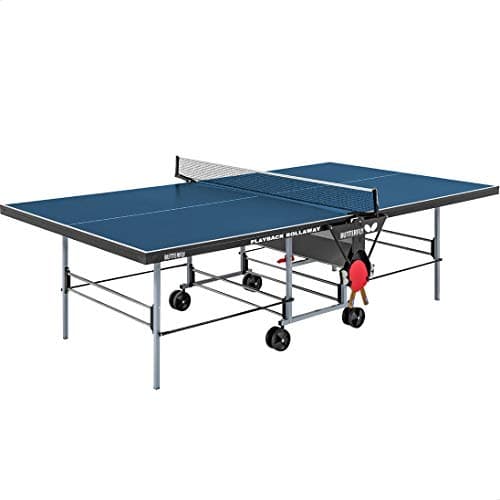 Best for solo practice Butterfly Playback 19 Rollaway Table Tennis Table A 19 mm rollaway whose playback position actually works. | One person who wants to practise without a partner | $999.69View on Amazon |
| 4 | 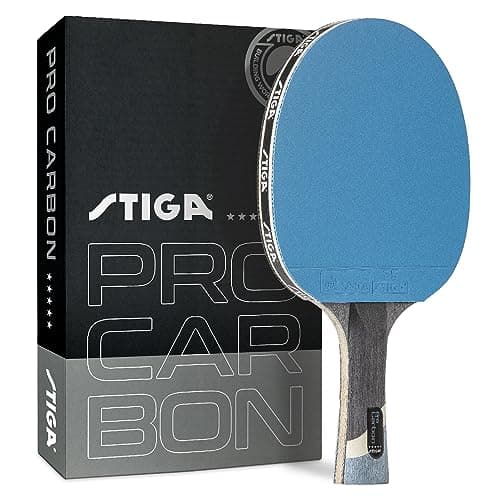 Best paddle for the real game STIGA Pro Carbon Table Tennis Racket Tournament-grade rubber for a player who has the strokes to use it. | Someone who has outgrown a control bat | $65.59$79.9918% offView on Amazon |
#ad · Buy links are affiliate links and we earn a commission on qualifying purchases. Prices and product photographs come from the Amazon listing itself and are refreshed daily; the date they were last checked is shown under each buy button. Where a maker does not sell through Amazon there is no product photo, and the card below says so.
1. Best regulation table
JOOLA Tour 1800 Table Tennis Table
JOOLA
If the distinction you care about is whether you are playing the actual sport, it comes down to the table rather than the name. A regulation table is 2.74 m by 1.525 m with the surface 76 cm from the floor, and anything smaller changes the geometry of the game.
The Tour 1800 is a full-size regulation table built as a rollaway, which is the format that makes a regulation table viable in a normal house — it folds, it moves, and it has a playback position for solo practice. The bounce is consistent enough to learn proper strokes on.
Full size is the part worth insisting on. Mid-size tables are genuinely fun and they teach slightly wrong timing, because the ball arrives sooner than it would in a real rally.
What we like
- Full ITTF playing dimensions — 2.74 m by 1.525 m
- Rollaway format, so it stores against a wall
- Playback position for practising alone
- Consistent bounce across the surface
Worth knowing
- Needs real floor space in use — the table is only part of it
- Heavy to move alone
- Indoor only
Who it’s wrong for
A room that cannot clear the playing space. A conversion top or a mid-size table is the honest answer there.
#ad · We earn a commission on qualifying purchases. How this is funded · Price as of November 9, 2026
2. Best value full-size table
STIGA Advantage Table Tennis Table
STIGA
A full-size table does not have to be expensive. The Advantage is regulation dimensions on a 19 mm top, which is thinner than a competition table's 25 mm and gives a slightly lower, deader bounce — noticeable to a strong player, invisible to most households.
What you get for the price is the right geometry. Everyone in the house learns the real distances, the real net height and the real timing, which is the thing that transfers if anyone ever plays elsewhere.
It is also light enough to move and quick to assemble, both of which matter more in practice than top thickness does for a family table.
What we like
- Regulation playing dimensions at a family price
- Quick assembly and light enough to reposition
- Rollaway halves for storage
- Right geometry for learning the real game
Worth knowing
- 19 mm top gives a lower, deader bounce than competition thickness
- Frame is lighter than premium tables
- Net and post set is basic
Who it’s wrong for
A club or a serious player. The top thickness is the limit and it cannot be changed.
#ad · We earn a commission on qualifying purchases. How this is funded · Price as of November 9, 2026
3. Best for solo practice
Butterfly Playback 19 Rollaway Table Tennis Table
Butterfly
A playback position folds one half of the table vertical so the ball returns to you, and it is the single feature that most increases how much a table gets used — because you can play when nobody else is available.
The Playback 19 is built around that, from a brand whose equipment is used in competition. At around 157 lb assembled it is on the lighter side of full-size rollaways, which makes folding and moving it a one-person job on a flat floor.
It is also the format that suits a shared room: upright and against a wall, a rollaway takes a fraction of the floor it uses in play.
What we like
- Playback position that is genuinely usable for solo drills
- Around 157 lb assembled — manageable to fold and move
- Competition brand with real build quality
- Stores upright against a wall
Worth knowing
- 19 mm top rather than competition 25 mm
- Playback practice builds some habits a partner would not
- Castors need a reasonably flat floor
Who it’s wrong for
A household where four people always play. The playback feature is wasted and the money could go to top thickness.
#ad · We earn a commission on qualifying purchases. How this is funded · Price as of November 9, 2026
4. Best paddle for the real game
STIGA Pro Carbon Table Tennis Racket
STIGA
If the ping pong versus table tennis question is really a question about whether you are playing seriously, the bat is where that shows up fastest. Tournament rubber generates the spin the modern game is built on, and a control bat simply cannot produce it.
The Pro Carbon is a carbon-layered blade with fast, grippy rubber — a real step up in both speed and spin. In the hands of a player with repeatable strokes it opens up topspin play that a beginner bat cannot do.
In the hands of a beginner it does the opposite, which is why it is the last pick here rather than the first. Buy it when you can place a slow topspin drive to a chosen half of the table reliably, not before.
What we like
- Carbon blade and tournament rubber — real spin generation
- Opens up the topspin game properly
- ITTF-approved rubber for sanctioned play
- Replaceable rubber, so the blade lasts
Worth knowing
- Punishing for a player without repeatable strokes
- Rubber wears faster than control rubber
- Expensive relative to a first bat
Who it’s wrong for
A beginner. See best ping pong paddles for beginners — a slower bat will make you better faster.
#ad · We earn a commission on qualifying purchases. How this is funded · Price as of November 9, 2026
Common confusions
The rules people think separate them
"Table tennis is to 11, ping pong is to 21." This is a real memory of a real change, misattributed. The ITTF moved from 21-point games to 11-point games in September 2001, and reduced the serve rotation from five points to two at the same time. If you learned on 21 and somebody younger learned on 11, you learned the same sport twenty-five years apart.
"Table tennis uses a different ball." Also a real change. The 38 mm ball was replaced by the 40 mm ball in October 2000, and celluloid was phased out in favour of plastic poly balls in 2014. Both changes applied to the sport, not to one name for it.
"Ping pong allows hardbat only." There is a hardbat competitive scene, and there was a short-lived World Championship of Ping Pong played with sandpaper bats specifically to reduce spin. That is a format within the sport — like three-on-three basketball — rather than a different sport. It is also the one place the word ping pong has been used to mean something technically distinct.
"Ping pong is the one you play in a basement." This is true as usage and false as rules, and it is the sense almost everyone means. Nobody is wrong to call a basement game ping pong.
If you want to play the real thing
What the equipment standards actually are
- Table: 2.74 m long by 1.525 m wide, with the playing surface 76 cm above the floor. A full-size table is the one spec that changes how the game plays, and mid-size tables teach slightly wrong timing.
- Net: 15.25 cm high across the full width, which is why a sagging net on a cheap table is worth replacing rather than tolerating.
- Ball: 40 mm plastic. Three-star balls are the competition grade; one and two star balls are practice balls and are perfectly fine for a basement.
- Scoring: games to 11, two clear points to win from 10-10, serve alternating every two points.
- Bat: no size limit, but the rubber must be ITTF-approved for sanctioned play and one side must be red and the other black (or another approved contrasting pair).
- Surface thickness: not an ITTF specification, but 25 mm is the competition norm and 19 mm the common home thickness. See 15mm vs 25mm.
The verdict
So which word should you use?
- Buying a table for a family — either, but search both. The same product is listed under both names, often at different prices.
- Joining a club or finding coaching — table tennis. That is what the institutions call themselves, for legal reasons that are now a century old.
- Talking about a basement or office game — ping pong. Nobody is being imprecise. It is the everyday name of the sport.
- Entering a sanctioned competition — table tennis. You will need ITTF-approved rubber and a full-size table, which is the actual distinction that matters.
- Buying equipment for a serious player — table tennis. The specialist retailers use that term, and the equipment specifications are written in it.
- Settling an argument — they are the same sport. One name was a trademark and the other was not.
Questions
Common questions
Is ping pong the same as table tennis?
Why are there two names for the same sport?
Do ping pong and table tennis use different rules?
Is the ball different in ping pong and table tennis?
Is ping pong an Olympic sport?
What size is a regulation table tennis table?
Sources
Keep reading
Read next