Buying guide
How to clean a pool table
Brush along the nap, never across it. That one rule does more for a table than everything else on this page combined.
By Ryder M. · Last updated October 6, 2026 · How we pick
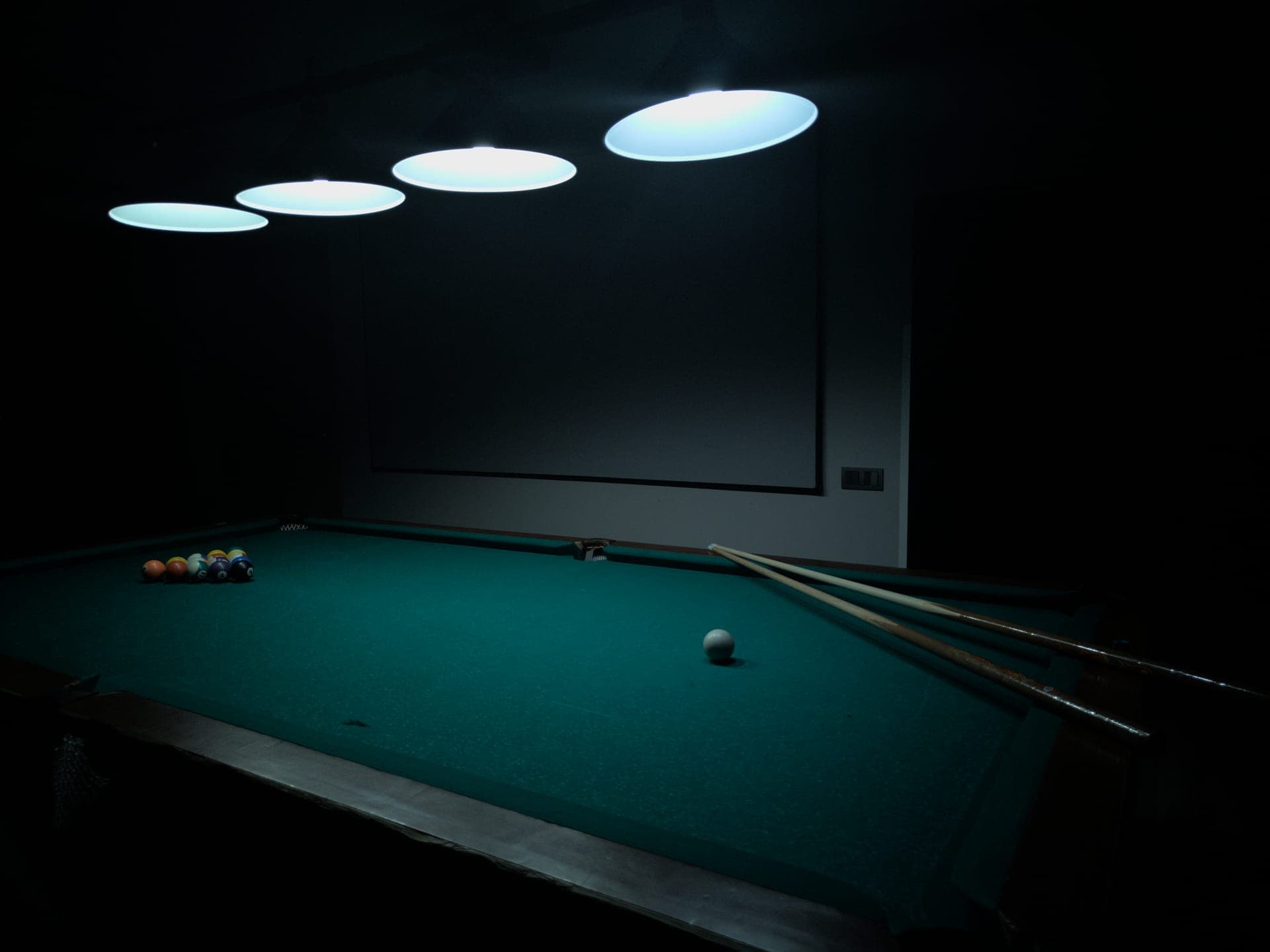
The direct answer: brush the cloth in one direction only — from the head of the table toward the foot, following the nap — using a soft-bristled pool table brush, working from the centre of the bed outward and finishing along the rails and into the pocket openings. Then wipe the balls with a damp cloth and dry them. Do that every few sessions and the cloth will last years longer. Never use water, household cleaner or a stiff brush on the cloth.
Pool cloth is woven wool, usually with a small nylon content, and it has a direction to it — a nap, like velvet. Brushing with the nap lifts the chalk dust out and leaves the weave sitting flat. Brushing against it, or in circles, works dust down into the weave and raises the pile, and a raised pile is exactly what makes a table play slow and inconsistent.
Kit
What you need
- A soft-bristled pool table brush. Not a household brush. The bristles are long, soft and set in a flat block so they reach into the weave without dragging it.
- A microfibre cloth, dry. For the rails, the cabinet and the balls.
- A second microfibre cloth, barely damp. Balls only. Never the cloth on the bed.
- A vacuum with a soft brush attachment and adjustable suction, used sparingly and only on low. Optional, and not a substitute for brushing.
- A fitted cover. Not a cleaning tool, but the thing that reduces how often you need to do any of this.
That is the entire list. The absence of liquids is deliberate: almost all permanent cloth damage we hear about comes from somebody applying something wet to it.
Method
Cleaning the cloth, step by step
- Clear the table completely — balls, rack, chalk, bridge. Chalk left on the rail is the usual source of the blue smear that appears mid-clean.
- Work out which way the nap runs. Draw a flat hand over the cloth from the head of the table toward the foot and then back; one direction feels smoother. The smooth direction is with the nap.
- Brush with the nap only, in long straight strokes from the centre of the bed out to each rail. Lift the brush at the end of every stroke rather than dragging it back.
- Brush along the base of each rail in the same direction, where chalk dust collects most heavily.
- Brush gently into each pocket opening, then empty the pockets of accumulated dust and chalk.
- Wipe the rails, the rail caps and the cabinet with a dry microfibre cloth. These are finished surfaces and can take a slightly damp cloth if they are varnished rather than veneered.
- Wipe each ball with the barely damp cloth, then dry it immediately. Dirty balls transfer grime back onto clean cloth within one rack.
On a table in weekly use that takes about ten minutes and wants doing every two or three sessions. A table played daily wants it weekly. A table that is covered between sessions can go considerably longer, which is the strongest practical argument for a cover.
Quick picks
Tap any row to jump to the full write-up.
| # | Product | Best for | Price |
|---|---|---|---|
| 1 | 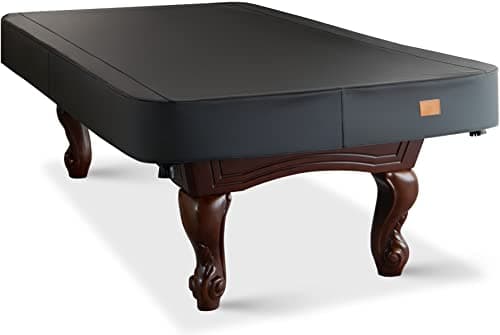 Best protection between sessions BearCover Heavy-Duty Fitted Pool Table Cover The single item that cuts how often the table needs cleaning at all. | Any table that is not played every day | $39.99View on Amazon |
| 2 | 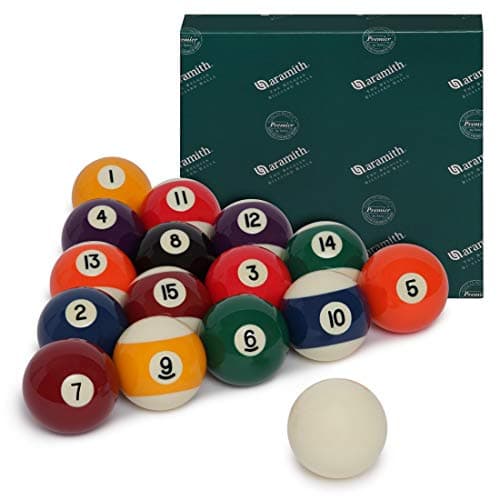 Best balls to keep clean Aramith Premier Billiard Ball Set Phenolic resin holds its surface, so it stops re-dirtying your cloth. | Anyone whose table looks dirty again a week after cleaning | $195.07View on Amazon |
| 3 | 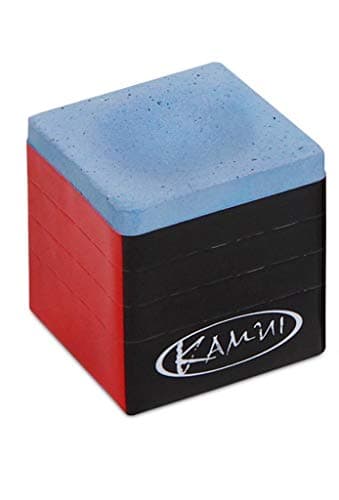 Best way to stop chalk dust at source Kamui Cue Chalk Finer chalk holds to the tip instead of flaking onto the cloth. | Tables with a blue patch appearing around the break spot | $31.34View on Amazon |
#ad · Buy links are affiliate links and we earn a commission on qualifying purchases. Prices and product photographs come from the Amazon listing itself and are refreshed daily; the date they were last checked is shown under each buy button. Where a maker does not sell through Amazon there is no product photo, and the card below says so.
1. Best protection between sessions
BearCover Heavy-Duty Fitted Pool Table Cover
BearCover
Cleaning is the response to dust; a cover is the prevention. Three things wear cloth faster than play — airborne dust ground in under the balls, direct sunlight weakening the nap, and claws — and a fitted cover removes all three.
Fitted matters more than heavy. A loose sheet slides off, gets dragged over the rails and ends up in a cupboard. A cover cut for your table size pulls on in one movement, so it actually gets used.
In a genuinely damp room, leave the table uncovered for a day after a wet spell so moisture is not held against the cloth.
What we like
- Stops the dust that makes cleaning necessary
- Blocks UV, which weakens the nap
- Fitted, so it stays on
- A fraction of the cost of recovering
Worth knowing
- Must match the table size — measure the cabinet
- Vinyl can trap moisture in a damp room
- Adds a step before every game
Who it’s wrong for
An outdoor table, which needs a weatherproof cover rated for standing water instead.
#ad · We earn a commission on qualifying purchases. How this is funded · Price as of November 9, 2026
2. Best balls to keep clean
Aramith Premier Billiard Ball Set
Aramith
Balls are how dirt gets back onto clean cloth. Polyester sets scuff and go slightly tacky with age, and a tacky ball picks up chalk and grime and deposits it along every roll.
Phenolic resin is harder and denser. The surface stays smooth for years, so it holds less and transfers less, and a quick wipe with a damp microfibre genuinely cleans it rather than smearing it.
It outlasts the cloth it rolls on, which makes it one of very few one-time purchases in this category.
What we like
- Smooth surface holds far less chalk and grime
- Wipes properly clean rather than smearing
- Keeps its gloss for years of play
- Outlasts the cloth beneath it
Worth knowing
- The most expensive item on this page
- Overkill on a worn engineered bed
- No benefit on a hard break — the gain is in slow rolls
Who it’s wrong for
A children's folding table, where the bundled set already matches the surface.
#ad · We earn a commission on qualifying purchases. How this is funded · Price as of November 9, 2026
3. Best way to stop chalk dust at source
Kamui Cue Chalk
Kamui
Most of what you brush off a pool table is chalk, and most of that chalk came off the tip before it ever did any work. Coarse cheap chalk flakes, and the flakes land on the bed and get ground in under the balls.
Finer chalk holds to the leather instead. You get noticeably fewer miscues and noticeably less blue dust on the cloth, which means less cleaning and a cloth that stays the colour it started.
Keep it in the rack rather than on the rail. Chalk that falls on the cloth is exactly the problem you are trying to avoid.
What we like
- Far less loose dust reaching the cloth
- Fewer miscues within a couple of games
- Lasts a long time for the price
- Makes an easy small gift for someone with a table
Worth knowing
- Easy to lose
- Does nothing for a tip that is already glazed
- Several times the cost of a basic cube
Who it’s wrong for
Someone whose cue tip needs replacing — fix the tip first, then worry about the chalk.
#ad · We earn a commission on qualifying purchases. How this is funded · Price as of November 9, 2026
The vacuum question
Should you vacuum pool table felt?
Carefully, occasionally, and never instead of brushing. A vacuum on low suction with a soft brush head lifts embedded dust that a brush alone leaves behind, and it is genuinely useful once or twice a year on a table in a dusty basement. The risk is mechanical: full suction on a thin woollen cloth pulls at the weave and can lift it off the slate where the adhesive is weakest, which is usually around the pocket cut-outs.
If you do vacuum, use the lowest setting the machine has, keep the head moving, work with the nap exactly as you would with the brush, and stay away from the pocket openings and the seams between slate sections. A beater bar or a rotating brush head should never touch pool cloth.
Damage control
Stains, spills and marks
| Problem | Do this | Do not |
|---|---|---|
| Dry chalk dust build-up | Brush with the nap; repeat if needed | Do not rub at it with a damp cloth |
| Fresh liquid spill | Blot straight down with a dry towel until no more lifts | Do not rub, and do not add water to dilute it |
| Dried drink stain | Brush it, accept the mark, plan to recover eventually | Do not apply any cleaner or solvent |
| Blue chalk mark on the cloth | Brush with the nap, repeatedly and patiently | Do not use a cloth-safe spray; most are not |
| Burn or cut in the cloth | Nothing — it is permanent; recover when it bothers you | Do not patch it; a patch plays worse than the damage |
| Dull, greasy-looking balls | Damp microfibre, then dry immediately | Do not put them in a dishwasher |
The hardest thing about a stain on pool cloth is accepting that there is no safe way to remove it. Recovering a table is a known cost; a bleached patch is not fixable at all.
Hard rules
What never to use on pool cloth
- Water. Wool shrinks and the adhesive under the cloth softens. A damp patch can lift the cloth off the slate.
- Household or upholstery cleaner. They are formulated to lift dirt out of synthetic pile with moisture and surfactants. On woollen pool cloth they bleach, stiffen and mark.
- Any solvent or alcohol wipe. It will take the dye with it.
- A stiff or wire brush. Raises the pile permanently and the table never plays the same again.
- A vacuum beater bar or rotating head. Mechanical damage to the weave, and a good chance of lifting a seam.
- Lint rollers and sticky sheets. The adhesive pulls fibres out of the nap.
- Iron or steam. This is a professional step done during recovering, not a home maintenance task.
Recovering
When cleaning will not fix it
Cloth is a consumable. In a home that plays weekly, it has roughly eight to twelve years in it before it is visibly shiny at the break spot and worn along the rail lines, and no amount of brushing brings that back. The giveaway is speed: a table that has gone slow and inconsistent despite careful cleaning has cloth that is finished.
Recovering a slate table is a real job but a well-established one, and it costs far less than a new table — which is part of why a slate table is worth keeping. An engineered-bed table is a different calculation: recovering can approach what the table is worth, and at that point it is usually time to look at a better table. Our cost guide has the bands.
If cleaning no longer brings the roll back, the cloth itself is the next decision rather than a better brush. Worsted and napped cloths behave very differently and cost very differently, and best pool table felt ranks the options for a home table.
Questions
Common questions
How do you clean a pool table?
Can you vacuum pool table felt?
How do you get a stain out of pool table felt?
How often should you clean a pool table?
Which direction do you brush a pool table?
Keep reading
Read next