Guide
Family game room ideas
Start with the clearance, not the theme. A room with one well-placed table beats a room with three nobody can walk around.
By Ryder M. · Last updated October 10, 2026 · How we pick
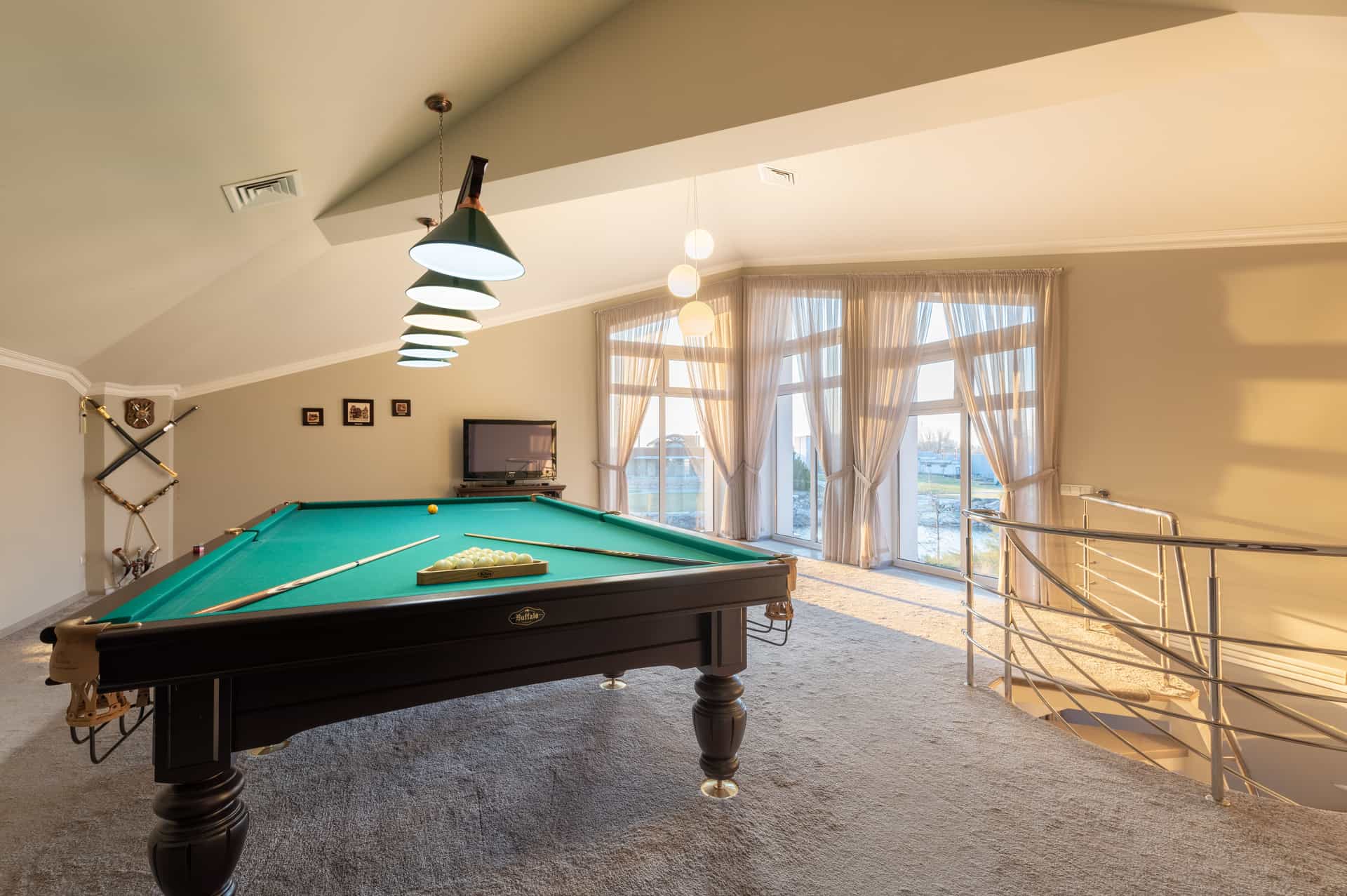
The short answer: plan the room around clearance first, pick one anchor table that fits with its full playing space, use the walls for the games that do not need floor (darts above all), and only then think about theme, seating and lighting. The commonest family game room mistake is choosing furniture before measuring, which produces a room with two tables and nowhere to stand.
The reason clearance dominates is that game tables are not furniture — they are furniture plus an envelope of space you have to be standing in to use them. A pool table needs roughly five feet on every side for a full cue. A table tennis table needs several feet behind each end. An air hockey table needs room at both ends for a player to reach. Add those envelopes up before you add the tables up, and most rooms turn out to have space for exactly one anchor.
The clearance table
What each game actually needs
| Game | Needs | Can it share space? |
|---|---|---|
| Pool, 7ft table | Table footprint plus about 5ft on all four sides | No — the envelope must stay clear |
| Table tennis, full size | Footprint plus several feet behind each end | Yes — folds and rolls away |
| Air hockey, 7ft | Footprint plus standing room at both ends | Partly — sides can be against furniture |
| Foosball, 55in | Footprint plus about 2ft at each end for rod pull | Partly — sides can be tight |
| Darts | A wall plus about 10ft of floor run, 3ft wide | Yes — uses a walkway |
| Multi-game flip top | The envelope of whichever game is up | It is the sharing solution |
Short cues reduce the pool clearance requirement meaningfully, which is often what makes a tight room workable. The per-size figures are in our pool table room size guide.
Quick picks
Tap any row to jump to the full write-up.
| # | Product | Best for | Price |
|---|---|---|---|
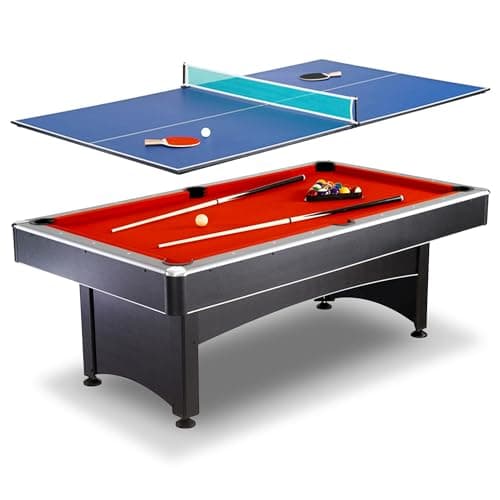
| 1 | 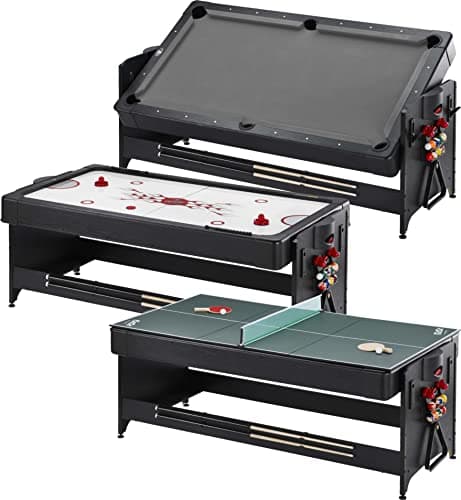 Best anchor for a small room Fat Cat Pockey 7 ft 3-in-1 Game Table Three games on one footprint — the right anchor when floor space is the limit. | Rooms that cannot host a dedicated table | $1,246.50$1,574.9921% offView on Amazon |
| 2 | 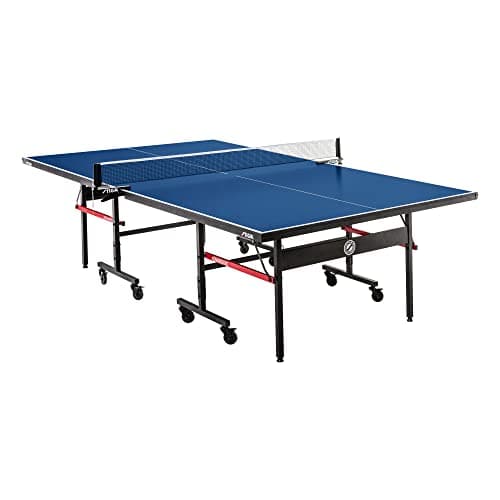 Best second game STIGA Advantage Table Tennis Table Table tennis folds away, which is why it is the best second table. | Rooms with storage along one wall | $455.90$599.9924% offView on Amazon |
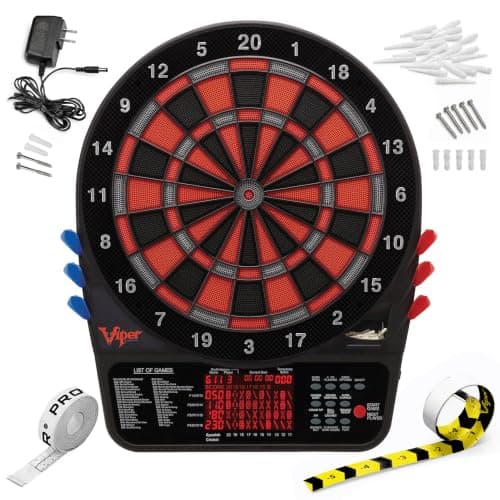
| 3 | 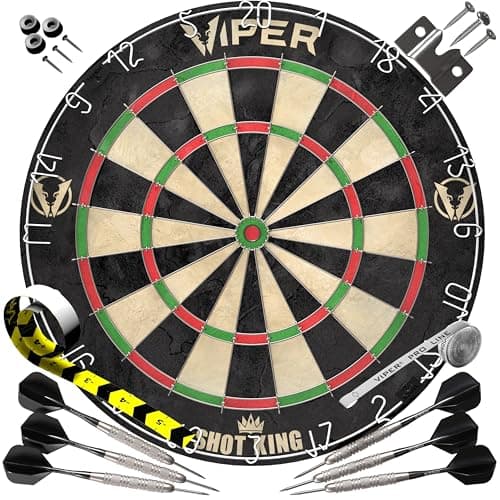 Best use of a wall Viper Shot King Bristle Dartboard A dartboard uses vertical space the rest of the room cannot. | Any game room with a free wall and a ten-foot run | $44.99$52.9915% offView on Amazon |
| 4 | 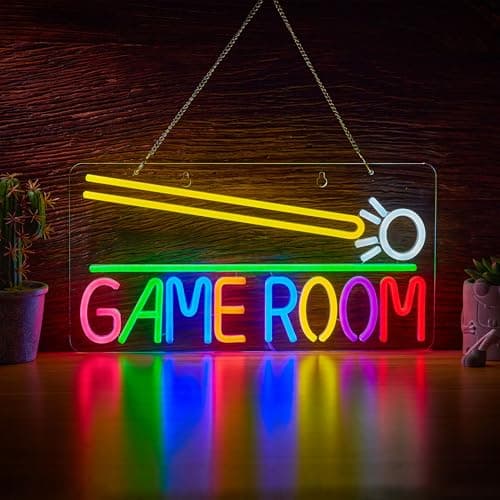 Best finishing touch Game Room Billiards LED Neon Sign The cheap thing that makes a room read as a game room. | Basements and spare rooms that feel unfinished | $29.99View on Amazon |
#ad · Buy links are affiliate links and we earn a commission on qualifying purchases. Prices and product photographs come from the Amazon listing itself and are refreshed daily; the date they were last checked is shown under each buy button. Where a maker does not sell through Amazon there is no product photo, and the card below says so.
1. Best anchor for a small room
Fat Cat Pockey 7 ft 3-in-1 Game Table
Fat Cat (GLD Products)
The anchor table is the decision the whole room is built around, and in a tight space a flip-top three-game table is usually the best one. One frame carries pool, table tennis and air hockey, and you rotate between them rather than owning three pieces of furniture.
The reason it works in a family room specifically is that different ages want different games, and a swap that takes thirty seconds actually happens. A conversion that needs two people and a cupboard does not, and the second game quietly stops existing.
Each individual game is a compromise, which is the honest cost. For a room where the alternative is one game or no game, it is a straightforwardly good trade.
What we like
- Three games on a single footprint
- Swapping games is fast enough that it happens
- Suits a wide age range in one purchase
- Flat-packed, so it gets into awkward rooms
Worth knowing
- Every game is a compromise version
- Rotation mechanism is the long-term wear point
- Still needs cue clearance on all four sides
Who it’s wrong for
A room with space for a dedicated table and a household focused on one game.
#ad · We earn a commission on qualifying purchases. How this is funded · Price as of November 9, 2026
2. Best second game
STIGA Advantage Table Tennis Table
STIGA
If there is room for a second table, table tennis is usually the right one, and the reason is that it is the only full-size game table that genuinely folds up and rolls against a wall. The room gets its floor back between sessions, which is what makes a dual-purpose family room work.
It also has the widest age range of any game in the category. A six-year-old and a grandparent can rally, which is not true of pool, and that makes it the game that gets played when the whole family is in the room rather than when two people are.
The clearance requirement is the catch and it is larger than people expect: a folded table stores small but a table in play needs several feet behind each end. Measure the playing footprint, not the storage one.
What we like
- Folds and rolls away, returning the floor
- Widest age range of any game table
- Playback mode works for solo practice
- Cheaper than most anchor tables
Worth knowing
- Needs more clear space in play than its footprint suggests
- Indoor tops do not survive garages or patios
- Balls end up everywhere
Who it’s wrong for
A room with no wall to store it against. A folded table still has to live somewhere.
#ad · We earn a commission on qualifying purchases. How this is funded · Price as of November 9, 2026
3. Best use of a wall
Viper Shot King Bristle Dartboard
Viper (GLD Products)
A dartboard is the highest-value thing you can put in a game room per square foot of floor, because it uses a wall and a walkway rather than a footprint. In a room already holding a table, that makes it close to free.
It is also the game that works with odd numbers of people and in short bursts, which fills the gap a table cannot. Somebody waiting for a turn at the table throws a few darts; nobody sets up a second table for five minutes.
What it does need is the right geometry and wall protection. A board hung at a convenient height teaches a wrong throw, and near misses go into the plaster.
What we like
- Uses wall space rather than floor space
- Works for one person or an odd number
- Genuine self-healing sisal at a modest price
- Short games fill the gaps between table turns
Worth knowing
- Needs about ten feet of clear floor run
- Steel tip is wrong for a house with small children
- Wall protection is an extra purchase
Who it’s wrong for
A room with no straight ten-foot run — see how much space do you need.
#ad · We earn a commission on qualifying purchases. How this is funded · Price as of November 9, 2026
4. Best finishing touch
Game Room Billiards LED Neon Sign
Roouneon
A game room is partly a signal that the space is for playing, and lighting does more of that work than furniture does. A wall sign or similar lighting changes a beige spare room into somewhere people choose to go, for very little money, with no floor space used.
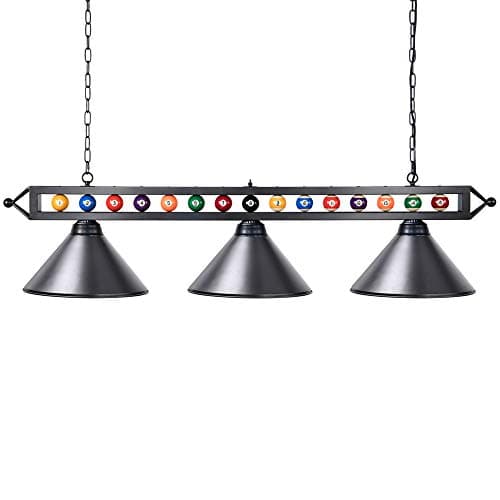
The practical version of this matters too: game rooms are usually under-lit. A pool table needs light over the bed without glare at eye level, and a dartboard needs light on the board without the thrower casting a shadow across it.
This is decoration, and it should be the last thing bought rather than the first. A room with great lighting and no clearance is still a room where nobody can take a shot.
What we like
- Changes how the room reads for very little money
- Uses wall space, not floor space
- Easy to put up and easy to change
- Makes a plain basement feel deliberate
Worth knowing
- Purely decorative
- Does not solve the actual lighting problem over a table
- Easy to overdo
Who it’s wrong for
A room where the clearances have not been sorted yet. Fix the layout first.
#ad · We earn a commission on qualifying purchases. How this is funded · Price as of November 9, 2026
The planning order
Pick one anchor, then build around it
- Measure the clear floor, to the lowest obstruction if the ceiling is low. Ducting and light fittings are what actually limit a basement, not the ceiling height in the middle.
- Draw the envelope, not the table. Mark the full playing space on the floor with tape before buying anything. This single step prevents most game room mistakes.
- Choose the anchor by who will use it most, not by what sounds best. A table the whole family plays beats a better table two people play.
- Put darts on a wall if there is a straight ten-foot run. It is the cheapest game per square foot in the room.
- Add seating at the edges, outside the envelope. Seating inside the clearance is the thing people trip over and then move permanently.
- Light it last, and light it properly. Light over the playing surface without glare at eye level, and no shadow across a dartboard from the thrower. For a pool table that means a dedicated fixture roughly two-thirds the length of the bed — see best pool table lights.
What else earns its place
Ideas for the room beyond the table
- Wall storage for cues, bats and mallets. Equipment on the floor gets stepped on and equipment in a cupboard gets forgotten. A rack on a wall is the difference.
- A scoreboard. Trivially cheap, and it makes games feel like games rather than knocking a ball about.
- Bar-height seating at the edge. Low sofas put spectators below the table and inside the clearance; stools keep them out of the way and at the right height.
- A rug outside the playing envelope, never inside it. A rug under a table makes it impossible to level and catches a cue on every low shot.
- A dehumidifier, if the room is a basement. MDF and particle board swell permanently when damp, which is what ends most basement tables.
- Somewhere to put drinks that is not the table. The single most common cause of ruined cloth and damaged surfaces.
The dual-purpose case
Rooms that have to do something else as well
Most family game rooms are not dedicated rooms. They are basements, garages, dining rooms or spare bedrooms that also store things, dry laundry or host guests. That changes the answer: the right anchor for a dual-purpose room is something that folds, converts or rotates, because a permanent table in a room with another job becomes a resented obstacle.
The two good solutions are a folding table tennis table, which genuinely returns the floor, and a dining-pool table, which turns the conflict into a feature. Dining pool table combos covers the second, best game tables for small apartments covers the tightest version of this problem, and best game table for a family works through choosing the anchor by household rather than by game.
If the room is a basement, two extra constraints apply that are worth reading up on before buying: stair access, because an assembled table will not turn on a landing, and humidity. Best multi game tables for basement covers both. And if you are starting from nothing, the first game room starter guide is the sequenced version of this page — what to buy first, second and third.
Questions
Common questions
How do you plan a family game room?
How much space does a family game room need?
What is the best game table for a family room?
Can a game room be a dual-purpose room?
What should go on a game room wall?
Keep reading
Read next