Buying guide
How to clean a dartboard
Never use water. Everything else about looking after a bristle board follows from that one rule.
By Ryder M. · Last updated October 6, 2026 · How we pick

The direct answer: brush a bristle dartboard with a soft dry brush, working outward from the centre, and nothing else. No water, no cleaning product, no damp cloth. Then rotate the board one segment every few weeks so the wear spreads across the whole face. Those two habits are the entire maintenance routine, and they will roughly double how long a board lasts.
A bristle board is compressed sisal — a dried plant fibre, packed under enormous pressure into a steel ring. The fibres part when a dart enters and close again when it leaves, which is why the board self-heals. Water makes sisal swell, and swollen sisal pushes against the ring, bursts the compression and never recovers. That is why water is the one thing that permanently destroys a dartboard, and why almost every cleaning instruction here is about what not to do.
Kit
What you need
- A soft dry brush. A clean shoe brush or a soft bristle brush. Nothing stiff and nothing wet.
- A dry microfibre cloth. For the wire spider and the number ring, not the sisal.
- A vacuum with a brush attachment, on low, for the surrounding wall and the floor. Optional, and not for the board face itself.
- A pencil and a note of where the 20 currently sits. For tracking the rotation.
That is the whole kit list, and it should be. Every product marketed as a dartboard cleaner is at best unnecessary and at worst a way of getting moisture into sisal.
Method
Cleaning a bristle board
- Take the board off the wall and lay it face up on a table. Working on the wall means dust falls back onto the face.
- Brush the face with the soft dry brush in short strokes, working outward from the bull toward the number ring. Outward, so dust leaves the board rather than being pushed deeper.
- Brush along the inside of each wire — the spider — where dust and dart shavings collect most heavily.
- Wipe the spider and the number ring with a dry microfibre cloth. These are metal and plastic and can take a slightly damp cloth if they are genuinely grubby, but keep the damp away from the sisal.
- Turn the board face down and tap the back firmly a few times. Loose fibre and dust fall out that no amount of brushing will lift.
- Rotate the board before you rehang it, and note where the 20 has moved to.
- Vacuum the wall and the floor around the mounting point. That dust is where most of the board's dust comes from.
On a board in regular use this takes about five minutes and wants doing monthly. A board in a dusty garage wants it more often; a board in a clean living room less.
Quick picks
Tap any row to jump to the full write-up.
| # | Product | Best for | Price |
|---|---|---|---|
| 1 | 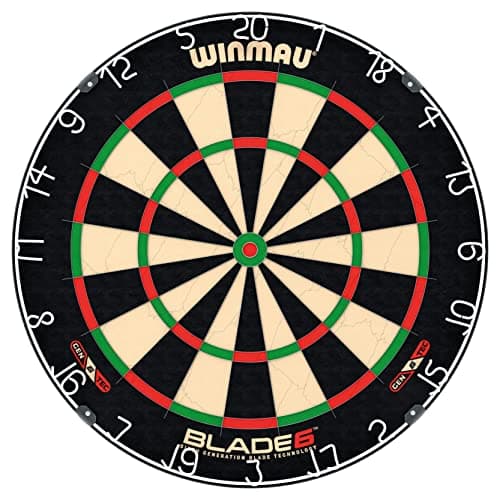 Best board to replace a worn one Winmau Blade 6 Single Core Dartboard Thin-wire construction that holds up to years of rotation and brushing. | A household replacing a board that has worn through | $89.00View on Amazon |
| 2 | 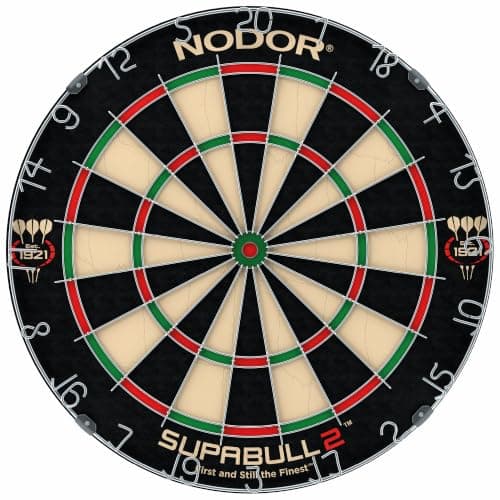 Best value replacement Nodor Supabull II Bristle Dartboard A solid sisal board at a price that makes rotation worth the effort. | Casual household play | $52.95View on Amazon |
| 3 | 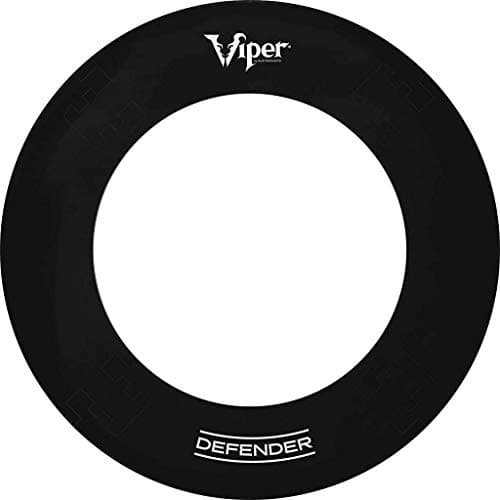 Best wall protection Viper Defender Dartboard Surround Catches the misses and keeps wall dust off the board. | Any board mounted on a wall you care about | $36.99View on Amazon |
#ad · Buy links are affiliate links and we earn a commission on qualifying purchases. Prices and product photographs come from the Amazon listing itself and are refreshed daily; the date they were last checked is shown under each buy button. Where a maker does not sell through Amazon there is no product photo, and the card below says so.
1. Best board to replace a worn one
Winmau Blade 6 Single Core Dartboard
Winmau
If a board has come all the way round on rotation and still bounces out, it is done, and this is the standard replacement. The wire spider is thin and set into the sisal rather than stapled over it, which means fewer bounce-outs and nothing for a brush to catch on during cleaning.
It is also a board that rewards maintenance. The sisal is densely packed, so brushing and rotating genuinely extend its life rather than postponing the inevitable by a month.
Hang it in a dry, heated room. That one decision does more for its lifespan than anything on this page.
What we like
- Thin-wire spider for fewer bounce-outs
- Densely packed sisal that rewards rotation
- Removable number ring, so rotation is tidy
- The de facto standard for home and league play
Worth knowing
- Costs several times a budget board
- Still destroyed by damp like any sisal board
- Steel tips only
Who it’s wrong for
A house with young children, where soft tip is the right answer — see best dartboards for kids.
#ad · We earn a commission on qualifying purchases. How this is funded · Price as of November 9, 2026
2. Best value replacement
Nodor Supabull II Bristle Dartboard
Nodor
For a board that gets played socially rather than seriously, this is the sensible level. The sisal is good quality and self-heals properly, and the wire is stapled rather than blade-set — slightly more bounce-outs, considerably less money.
Maintenance matters more on a board at this level, not less. Rotation is what gets you several years instead of one, because the high-traffic segments are where a stapled board shows wear first.
Brush it, rotate it, keep it dry, and it will outlast most people's interest in replacing it.
What we like
- Good self-healing sisal at a modest price
- Rotation extends its life substantially
- Widely available, so replacement is easy
- Fine for social and family play
Worth knowing
- Stapled wire causes more bounce-outs than blade designs
- Number ring is fixed on some versions, making tidy rotation harder
- Wears faster than a premium board under heavy play
Who it’s wrong for
A keen player practising daily, who will wear the treble twenty out faster than rotation can compensate for.
#ad · We earn a commission on qualifying purchases. How this is funded · Price as of November 9, 2026
3. Best wall protection
Viper Defender Dartboard Surround
Viper (GLD Products)
Most of the dust that ends up on a dartboard comes off the wall around it, knocked loose by darts that missed. A foam surround catches those darts before they reach the plaster, which protects the wall and keeps the board cleaner at the same time.
It also makes the throwing lane safer, because a dart that hits foam drops rather than bouncing back into the room.
It fits around the board rather than behind it, so it does not interfere with rotation.
What we like
- Stops darts marking the wall
- Reduces how much dust reaches the board
- Dropped darts instead of bounce-backs
- Does not interfere with rotating the board
Worth knowing
- Foam marks visibly over time
- Adds width, so check the space around the board
- Does nothing for darts that miss by a long way
Who it’s wrong for
A board already mounted in a cabinet, which does the same job — see dartboard cabinets.
#ad · We earn a commission on qualifying purchases. How this is funded · Price as of November 9, 2026
Wear
Rotating the board — the habit that matters most
Nobody throws evenly at a dartboard. Almost all the wear goes into the treble twenty, the treble nineteen and the bull, and on a board that is never rotated those three areas fail while the rest of the face is practically new. Rotating the board moves the worn segment away from the throwing line and brings fresh sisal into it.
The method is simple: lift the board off the bracket, turn it one segment clockwise, and rehang it. Do that every few weeks on a board in regular use. Most modern boards have a removable number ring so the numbers can be put back in the correct orientation afterwards; on boards with a fixed ring, the convention is to rotate the board and accept that the 20 is no longer at the top until it comes round again.
Problems
Mould, damp and dust
| Problem | Cause | What to do |
|---|---|---|
| Dusty, dull face | Normal wear and room dust | Brush outward from the centre, dry only |
| Fibres standing up around the bull | Heavy throwing in one area | Brush them flat; rotate the board |
| Mould spots on the face | Damp air — a garage, shed or cold external wall | Move the board to a dry room; brush gently when fully dry |
| Board face bulging or soft | Water, directly or from humidity | Terminal. The compression is gone; replace the board |
| Darts not sticking where they used to | Worn sisal in the high-traffic segments | Rotate the board; if it has come all the way round, replace it |
| Rattling wire / loose spider | Repeated dart impacts on the wire | Press the staples back if it is a stapled board; a loose spider is not repairable on blade designs |
Mould on a dartboard is a room problem, not a board problem. Cleaning it off a board left in a damp garage achieves nothing if the board goes back in the garage.
Hard rules
What never to do to a bristle board
- Never apply water. Sisal swells, bursts the compression in the steel ring, and the board is finished. This includes damp cloths, sprays and steam.
- Never use any cleaning product. There is no safe solvent, detergent or upholstery cleaner for compressed sisal.
- Never leave it flat, face up, for long periods. Dust settles into the fibres and gravity does the rest. Store it hanging.
- Never hang it in a bathroom, conservatory, shed or unheated garage. Humidity does the same job as water, more slowly.
- Never use a stiff or wire brush. It tears fibres out instead of lifting dust.
- Never try to repair a hole. Filler and glue both harden, and a hard spot deflects darts. Rotate instead.
- Never oil or condition it. Sisal is not leather and oil ruins the self-healing action completely.
Soft tip
Cleaning an electronic dartboard
Electronic boards are plastic and far less fussy. Wipe the segmented face with a barely damp cloth and dry it immediately, keeping moisture away from the display and the battery compartment. Clear broken tips out of the segment holes with tweezers rather than pushing them through — a tip pushed into a hole is what causes a segment to stop registering.
The characteristic electronic-board fault is a segment that scores intermittently, and the usual cause is a broken tip jammed under it rather than a failed sensor. Check that before concluding the board is dying. Our bristle vs electronic comparison covers the full ownership differences between the two types.
Lifespan
When to replace instead of clean
A good bristle board rotated properly lasts years of regular household play. The end comes when the high-traffic segments no longer hold a dart reliably in any rotation — at that point the sisal has lost its compression across the whole face and nothing brings it back. The tell is bounce-outs increasing everywhere rather than in one spot.
A board that has been wet, bulged or gone mouldy is finished immediately regardless of how new it is. That is worth knowing before you hang a board in a garage, because it is the single most common way a perfectly good board gets destroyed. If bounce-outs are your main complaint on an otherwise sound board, the cause may be the board design rather than wear — see best dartboards for no bounce outs.
Questions
Common questions
How do you clean a bristle dartboard?
Can you use water on a dartboard?
How do you get mould off a dartboard?
How often should you rotate a dartboard?
How long does a dartboard last?
Keep reading
Read next